
Fishen
Choosing the best Cnc Turning Center manufacturer in China is not a brand-name contest. It is a test of accuracy, uptime, and support under real production conditions. A machine may look impressive in a showroom, yet struggle with vibration during long runs. Buyers should compare spindle performance, turret indexing, control compatibility, service response, and the availability of replacement parts.
The scale of automation matters. The International Federation of Robotics reported 276,288 industrial robots installed in China in 2023, representing 51% of global installations (World Robotics 2024). That figure signals a highly automated manufacturing environment, but it does not measure CNC turning-center quality or identify the best supplier. Important distinction. Manufacturing quality expert Joseph M. Juran’s principle, “Quality does not happen by accident,” offers a useful lens: inspect documented processes, not just polished claims.
This guide compares Chinese manufacturers through practical evidence, including machine specifications, inspection practices, customer support, and application fit. Look for details you can verify: repeatability test results, sample-part tolerances, and clear warranty terms. Ask how the supplier handles a spindle alarm at 2 a.m., not only how fast the machine cuts during a demonstration. No single ranking can fit every shop. A high-volume automotive line and a small job shop need different things. Some published specifications may also be difficult to compare directly. The right choice depends on your parts, operators, budget, and service expectations.
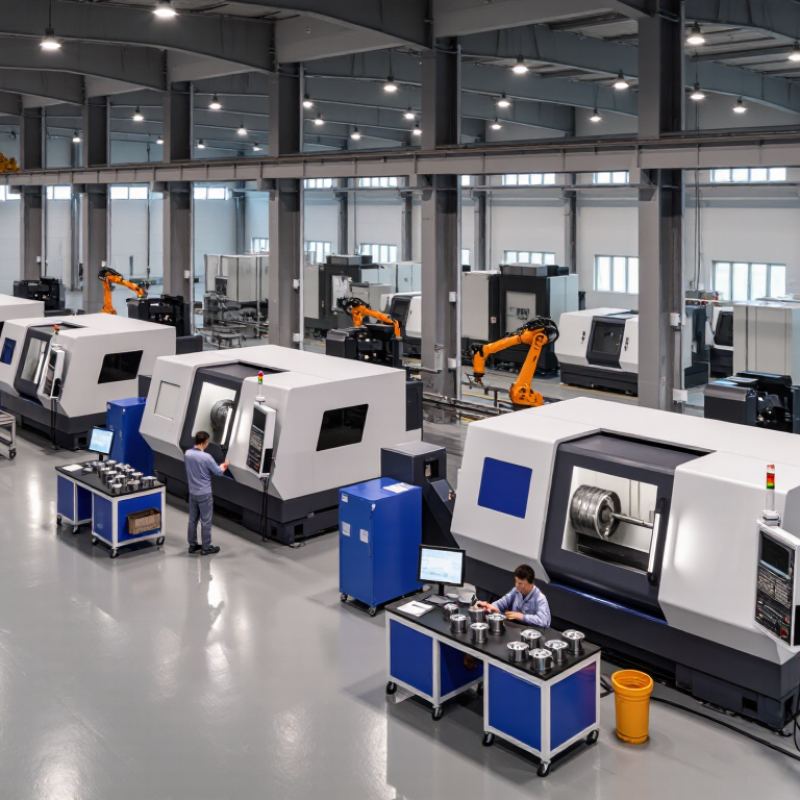
A CNC turning center manufacturer is defined by more than the machines it sells. It should understand how spindle performance, bed rigidity, turret design, and thermal control affect real cutting work. Ask how each machine is assembled and tested. A reliable answer may describe inspection procedures, sample cuts, and measured results, rather than relying on broad claims. Details matter. For example, ask whether accuracy is checked after the machine reaches operating temperature. A polished brochure cannot answer that question for you.
Tips: Request a sample part made from your material. Check its dimensions, surface finish, and cycle time. Ask what measuring tools were used, and whether the results can be shared.
A capable manufacturer also offers clear technical documentation, practical operator training, and support for maintenance and spare parts. These services affect uptime after installation, not just the purchase decision. Compare how suppliers handle questions about tooling, workholding, and production changes. Specific guidance is useful; vague promises deserve a closer look. No manufacturer is perfect, and specifications alone can be misleading. Review test conditions and confirm that they match your intended workload. A careful buyer should also consider whether the machine’s capacity fits typical parts, not only the largest job on the schedule.
Designing a CNC turning center starts with the parts it must make. Engineers consider workpiece diameter, material, cutting force, and required accuracy. These choices shape the spindle, chuck, tool turret, and machine bed. A rigid bed helps limit vibration during heavy cuts. It must also provide space for chips and coolant to leave the cutting area. Small layout decisions matter.
Manufacturing turns those plans into a working machine. The bed is cast or fabricated, then machined to create precise mounting surfaces. Stress relief can reduce movement over time, though it cannot eliminate every source of distortion. Spindle assemblies, guideways, and ball screws are fitted with careful alignment. Technicians check runout and movement using calibrated instruments. A tiny error can show up on the finished part.
Assembly is only part of the process. The machine must be tested under realistic operating conditions, with attention to temperature, vibration, and positioning accuracy. Tool changes and control functions need practical checks too. The first test cut can reveal issues that measurements alone miss. That deserves attention. A good manufacturer documents inspection results and investigates unexpected variation rather than simply adjusting the machine until it passes. Even a carefully built turning center may need refinement after testing; honest process control is more reliable than promising perfection.
Representative configurations range from two-axis X/Z turning to five-axis mill-turning. More controlled axes can support additional machining operations in one setup. Manufacturers design and build these machines around a rigid bed, spindle, tool turret, guideways, and drive systems, then assemble and test the machine for alignment and operation. Actual axis layouts vary by machine.
A reliable CNC turning center manufacturer should be judged by measurable performance, not polished brochures. Ask how the machine holds dimensional accuracy during a full shift, not just during a brief demonstration.
Request a test cut on a part similar to yours, using the intended material and cutting conditions. Check the finished diameter, surface finish, and chip control. Small differences matter.
Look closely at spindle power across its speed range, turret indexing time, axis repeatability, and thermal behavior after warm-up. Ask for inspection records and clear test conditions; figures without context are hard to compare.
Service matters, too. Confirm technician coverage, response times, spare-parts availability, and training for operators and maintenance staff.
A factory visit can reveal practical details: cable routing, guarding, assembly cleanliness, and how technicians document adjustments. Speak with existing users, if possible, about downtime and support after installation.
A checklist helps, but it can miss awkward realities, like whether a tall operator can safely reach the chuck area. I would not treat one impressive sample part as proof. Real production is less tidy.
A CNC turning center manufacturer’s technology is best judged by what the machine can repeatedly produce, not by a control screen or a long feature list. Ask how spindle temperature is managed during extended runs, and whether the turret holds position after thousands of tool changes. These details affect bore consistency and surface finish. Small differences matter.
Production capacity is more than factory size. A supplier with organized assembly stations, calibrated inspection equipment, and traceable component checks may deliver more reliably than a larger plant with uneven processes. Look for evidence: machine inspection records, spindle runout measurements, and sample parts cut from the materials you actually use. A polished demonstration is not enough. It can hide setup limits.
Compare each manufacturer against your part mix and expected order volume. Ask to see a similar turning center running a realistic cycle, then review dimensional results from several parts—not just one. Check lead times for standard machines and replacement components, too. Some buyers focus heavily on automation. That may be a mistake for short, varied runs. Still, supplier comparisons are imperfect; factory visits can show only one moment in a changing production schedule. Reliable decisions come from matching verified technical performance with capacity that the supplier can document.
Choosing a CNC turning center manufacturer starts with the part, not the catalogue. List your materials, maximum workpiece diameter, tolerance, batch size, and expected shift pattern. Then ask for a machine test using a representative component. A polished showroom cut proves little if your parts are thin-walled, difficult to grip, or prone to heat distortion. Request measured runout, repeatability, cycle time, and surface finish under stated conditions. Check how these figures were measured; otherwise, comparisons can be misleading.
Automation matters when production volumes justify it. The International Federation of Robotics reported 541,302 industrial robots installed worldwide in 2023, with annual installations above 500,000 for the fourth consecutive year. This does not mean every shop needs a robot. It does mean buyers should check interface options, bar-feeder compatibility, part handling, and guarding before purchase. Look closely. Ask who commissions the system and how operators learn to recover from common faults.
Service capacity deserves the same scrutiny as spindle power. Deloitte and The Manufacturing Institute estimated that US manufacturing could need 3.8 million workers between 2024 and 2033, with 1.9 million jobs potentially unfilled. That makes clear manuals, practical training, and responsive technical support valuable selection criteria. Ask for local response times, spare-parts lead times, and a sample maintenance schedule. A low quotation may omit installation or tooling costs. The calculation is imperfect, but total cost over several years is usually more useful than purchase price alone.
The workpiece diameter, material, cutting force, and required accuracy guide the spindle, chuck, turret, and bed design. Layout matters.
A rigid bed helps reduce vibration during heavy cuts. It also needs room for chips and coolant to exit.
Technicians fit the spindle, guideways, and ball screws with careful alignment. Calibrated instruments check runout and movement. Tiny errors matter.
Tests should cover temperature, vibration, positioning accuracy, tool changes, and control functions. A real test cut can reveal issues measurements miss.
Share material, diameter, tolerance, batch size, and shift pattern. Request a test using a representative part, then review measured results.
Ask for runout, repeatability, cycle time, and surface finish under stated conditions. Thin-walled parts may behave differently from showroom samples.
Automation may help when production volume justifies it. Check bar-feeder compatibility, part handling, guarding, and operator training needs.
Ask about local response times, spare-parts lead times, manuals, training, and maintenance schedules. Recovery from common faults matters.
Not always. Include installation and tooling, then estimate costs over several years. That calculation is useful, but imperfect.
No. Testing may reveal a need for refinement, and some distortion can remain. Honest records help teams investigate variation.
Choosing the best CNC turning center manufacturer in China depends on more than price or advertised specifications. A capable manufacturer should understand how machine design, component selection, assembly, and quality checks work together to deliver accuracy, rigidity, reliability, and consistent production. When comparing suppliers, evaluate their engineering expertise, manufacturing facilities, inspection processes, customization options, technical support, and ability to meet delivery and service expectations. Production capacity and technology can vary, so review relevant machine configurations and confirm that stated performance suits your requirements.
Start by defining the materials, part dimensions, tolerances, production volume, and automation needs for your application. Then compare potential manufacturers using clear criteria, request detailed technical information, and assess their communication and after-sales support. The right Cnc Turning Center manufacturer is the one whose equipment and capabilities match your actual operating conditions, quality goals, and long-term plans—not simply the one with the lowest quotation.
