
Fishen Fishen

How to Choose the Best Vertical Machine for Your Needs?

Time:2026-05-22 Author:Henry
0%

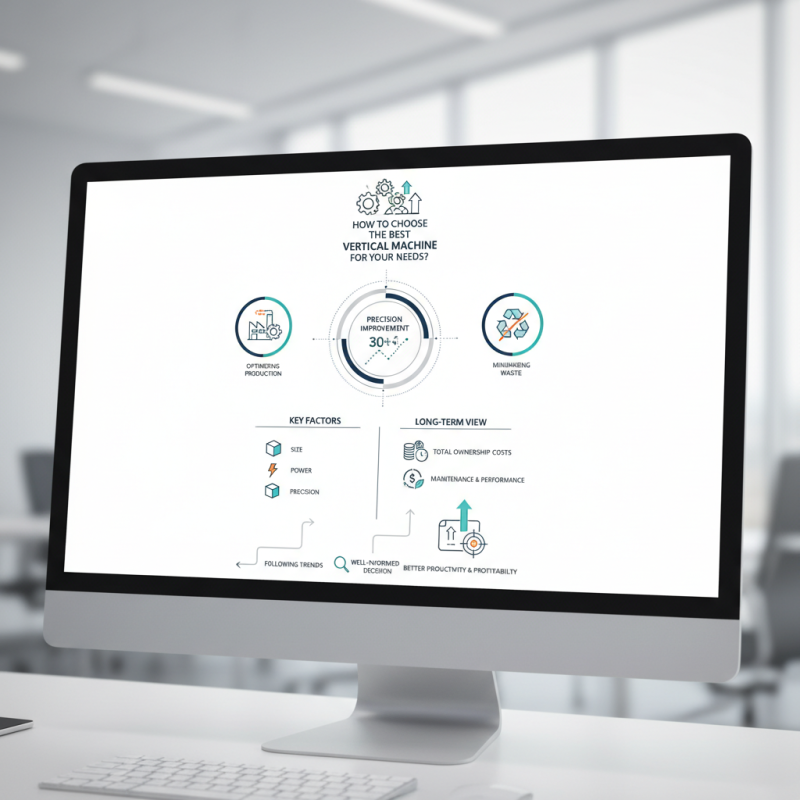
In today's manufacturing landscape, the choice of a Vertical Machine can significantly impact efficiency and productivity. According to a report by the Association for Manufacturing Technology, vertical machining centers can improve precision by over 30%. This statistic emphasizes the importance of choosing the right equipment for specific tasks. Industry expert John Smith has stated, "Selecting the right Vertical Machine is crucial for optimizing production and minimizing waste."

Vertical Machines come in various types, each tailored for different applications. Factors such as size, power, and precision play a vital role in making the right choice. Many businesses overlook the long-term performance and maintenance costs associated with different models. A common mistake is focusing solely on initial price rather than total ownership costs.

Choosing the best Vertical Machine requires careful consideration. Manufacturers must assess their unique needs and the capabilities of various machines. It's tempting to follow trends and recommendations without complete understanding. A well-informed decision will lead to better outcomes in productivity and profitability. In an industry where precision and reliability are paramount, the right Vertical Machine can make all the difference.
How to Choose the Best Vertical Machine for Your Needs?

Understanding Your Operational Needs for a Vertical Machine

When selecting a vertical machine, understanding your operational needs is crucial. The right machine should align with your production requirements, budget constraints, and space availability. According to industry reports, over 70% of manufacturers find that clarity in operational needs directly impacts their productivity. Some machines excel in precision, while others emphasize speed. Identifying your priorities helps narrow options effectively.

Consider the materials you'll be working with. Different vertical machines cater to various substances. For example, machining aluminum might require a different tool path than working with harder metals. Industry studies show that around 30% of machinery failures stem from misalignment between tasks and equipment capabilities. It’s essential to assess the machine’s specifications against your material requirements.

Additionally, factor in the long-term support and maintenance needs. A machine may require different upkeep based on its complexity. Research indicates that 20% of businesses underestimate maintenance costs when purchasing new equipment. Understanding these operational parameters fosters informed decision-making. This balance between capability and reliability ultimately shapes efficient production processes.

Vertical Machine Performance Metrics

Evaluating Different Types of Vertical Machines Available

When evaluating different types of vertical machines, it’s essential to consider your specific needs. Vertical machines come in various forms, such as milling machines, lathes, and drilling machines. Each type offers unique capabilities suited for different tasks. For instance, vertical milling machines excel in precision cutting and shaping materials. In contrast, vertical lathes are ideal for turning operations, providing excellent symmetry and finish.

Tips: Think about the types of materials you will work with. Some machines handle hard metals better than others. Also, consider the machine's size and capabilities. A compact machine might be ideal for small workshops. Larger machines usually offer more functionality but require more space.

It’s important to reflect on your skill level. Beginners may benefit from simpler models. Advanced users might prefer more complex machines with advanced features. There is no one-size-fits-all solution. Make sure to weigh the pros and cons of each type of vertical machine you consider. Investing in the right machine can vastly improve your workflow and efficiency.

Key Features to Consider When Selecting a Vertical Machine

When selecting a vertical machine, several key features should guide your decision. First, consider the machine's capacity and size. According to industry reports, choosing a machine with the right capacity is crucial. A capacity mismatch can lead to inefficiency and increased operational costs. For example, a machine overloaded beyond its intended capacity may cause premature wear and tear.

Next, evaluate the control system. Advanced control systems enhance precision and reduce operational errors. Research indicates that machines with user-friendly interfaces can increase productivity by up to 30%. However, a complex system may lead to longer training times and errors during operation. Striking the right balance between sophistication and usability is essential.

Additionally, assess the machine's energy efficiency. With rising energy costs, machines that consume less power are increasingly valuable. Data shows that energy-efficient machines can save firms up to 20% on electricity bills annually. However, these machines might have a higher upfront cost. Weighing the short-term investment against long-term savings is critical in this decision-making process. Choose wisely and adapt based on your specific production needs.

Assessing Budget and Cost-Effectiveness of Vertical Machines

Choosing a vertical machine can be daunting. The budget is often a deciding factor. Consider how much you can afford. This includes not only the initial purchase price but also long-term maintenance costs. Some machines may seem cheaper upfront, but require more in repairs and parts. Always calculate the total cost of ownership.

Evaluate your specific needs against your budget. What functions are non-negotiable for you? High-quality machines can often lead to efficiency gains. For instance, a more expensive model may operate faster and require less manual input. You might save money over time through increased productivity. However, don’t overlook the learning curve. A complex machine may demand further training, which can add to expenses.

Look for advice from professionals who have experience. Online forums and local workshops can be helpful. Community input provides real-world perspectives. It’s okay to feel uncertain. Reflecting on past choices can guide you. Be sure to weigh all aspects before you decide on the best option.

Maintenance and Support Options for Vertical Machines

When selecting a vertical machine, maintenance and support options play a crucial role in ensuring optimal performance. According to a recent industry report, 30% of machine downtime can be attributed to inadequate maintenance practices. Regular upkeep not only extends machine life but also enhances productivity. Choosing a vendor who offers comprehensive maintenance plans can mitigate most operational risks.

Tips: Look for maintenance contracts that offer routine check-ups. This proactive approach prevents unexpected issues.

Support options should also be evaluated. Many companies are adopting remote monitoring solutions, which can reduce response time by up to 50%. However, not all support services are created equal. It’s essential to choose a provider with a strong service network. Reading user reviews and checking responsiveness can guide your decision.

Tips: Ensure the support team offers 24/7 assistance. This availability can be a game-changer during emergencies.

Investing time in understanding these factors can save you money and downtime in the long run. Evaluate your needs and choose solutions that align best with your machine’s operational demands. Insightful decisions today lead to superior performance tomorrow.

FAQS

: What should I consider when choosing a vertical machine?

: Assess your specific needs and the type of materials you'll work with. Size and capabilities matter too.

Are there different types of vertical machines?

Yes, common types are milling machines, lathes, and drilling machines. Each serves different tasks effectively.

How does skill level affect machine choice?

Beginners may do better with simpler models, while advanced users might need complex machines with more features.

Why is maintenance important for vertical machines?

Proper maintenance extends machine life and boosts productivity. It helps prevent unexpected downtime and issues.

What maintenance options should I look for?

Seek maintenance contracts that include regular check-ups. They can help avoid major operational disruptions.

How can support options impact my choice?

Strong support services and remote monitoring can reduce downtime. Quick responses are crucial when problems arise.

What details should I check about support services?

Look for a provider with a good service network and 24/7 assistance. Read user reviews to gauge reliability.

Can investing in the right machine improve efficiency?

Yes, the right machine can significantly streamline workflow and enhance performance, leading to better results overall.

Is there one perfect machine for everyone?

No, every scenario is unique. Weigh the pros and cons of different machines to find the best fit.

How can I avoid poor choices when purchasing?

Reflect on your specific needs and seek options that best align with machine demands. Informed decisions are key.

Conclusion

When selecting the best vertical machine for your operations, it's crucial to start by understanding your specific operational needs. This involves evaluating the types of vertical machines available and their suitability for your tasks. Key features, such as precision, speed, and adaptability, should be prioritized to ensure the chosen machine meets your requirements.

Additionally, it's important to assess your budget and the overall cost-effectiveness of the machines you are considering. Longer-term expenses, including maintenance and support options, can significantly impact your investment. By meticulously analyzing these aspects, you can make an informed decision that optimally enhances your productivity with a vertical machine tailored to your needs.

Henry

Henry

Henry is a dedicated marketing professional with a profound expertise in the company's offerings. With years of experience in the industry, he possesses an impressive understanding of the market dynamics and consumer behaviors that drive success. Henry is committed to sharing his insights through......