
Fishen Fishen

How to Choose the Right Turning Center in 2026?

Time:2026-09-14 Author:Liam
0%

Choosing the right Turning Center in 2026 requires more than comparing spindle speed and purchase price. The machine must fit actual production demands, operator skills, floor space, and future orders. A compact shop may value a small footprint, quick setup, and reliable chip evacuation. A high-volume manufacturer may need a powerful spindle, bar feeder integration, robotic loading, and stable thermal control. These differences matter.

Start with real production evidence. Review part drawings, material grades, tolerances, batch sizes, and cycle-time records. A titanium component behaves differently from an aluminum housing. Test cutting is valuable. It can reveal vibration, tool wear, surface-finish problems, and coolant limitations before installation. Supplier demonstrations should use comparable material and tooling, not only an easy sample part.

Control capability matters. Confirm positioning accuracy, repeatability, probing options, and documented inspection procedures. Ask how the builder supports software updates, spare parts, training, and remote diagnostics through the machine’s expected service life. Reliable technical support can prevent an inexpensive machine from becoming an expensive interruption.

Do not trust impressive specifications alone. A higher maximum rpm may provide little benefit if the tooling lacks balance or rigidity. Initial cost estimates often overlook workholding, tooling, programming, maintenance, and operator training. That mistake is common. It deserves honest review.

The best choice may not be the most advanced model. It should deliver consistent parts, predictable operating costs, and measurable productivity. In 2026, careful buyers will compare verified performance with practical shop experience, then challenge every assumption before signing an order.
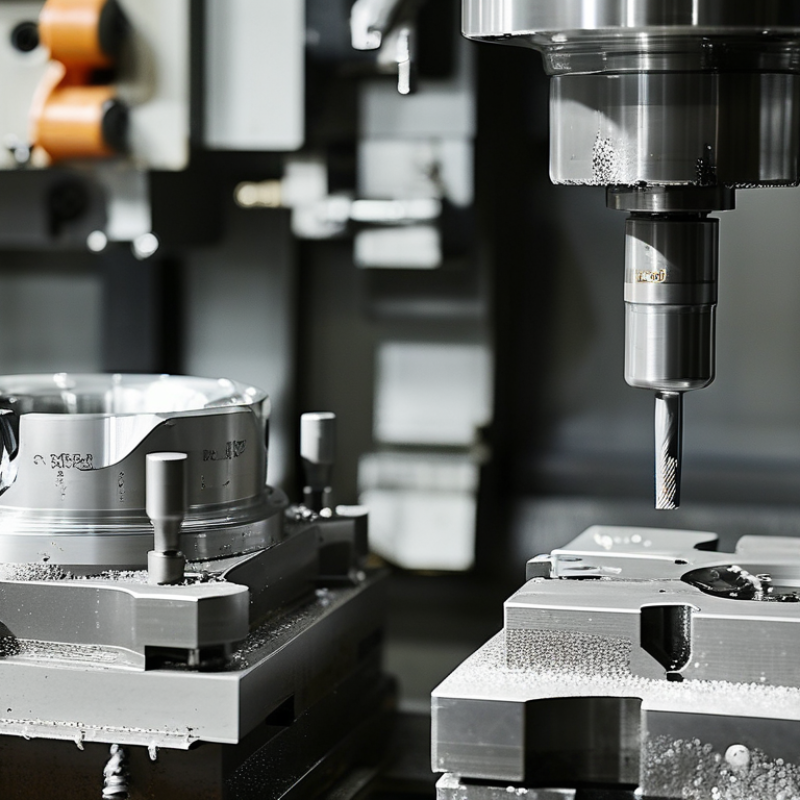
How to Choose the Right Turning Center in 2026?

What a Turning Center Is and How It Works

How to Choose the Right Turning Center in 2026?

A turning center is a computer-controlled machine that rotates a workpiece against cutting tools. Unlike a basic CNC lathe, it may include live tooling, a C-axis, Y-axis movement, and automatic tool changes. These features allow turning, drilling, threading, grooving, and light milling in one setup. The spindle holds the material firmly, while servo-driven axes guide each tool along programmed paths. Coolant removes heat and carries chips away from the cutting zone.

The process starts with a digital drawing and a machining program. The operator sets workholding, tool offsets, cutting speed, feed rate, and safety limits. A bar feeder can supply long material continuously. A parts catcher can reduce manual handling.

Small details matter. Poor chip control can damage a polished surface within minutes. Excessive speed can shorten tool life, even when the cycle time looks attractive.

USD 83 billion Grand View Research estimated the global CNC machine tools market at about USD 83 billion in 2023, showing strong demand for programmable production equipment.

Automation is becoming more relevant. The International Federation of Robotics reported 541,302 industrial robots installed worldwide in 2023. That figure does not measure turning centers directly, but it reflects wider investment in connected manufacturing.

When comparing machines, review spindle torque, maximum diameter, bar capacity, axis travel, positioning accuracy, and service access.

Also inspect sample parts, not only brochures.

A turning center that looks efficient on paper may struggle with thin walls, interrupted cuts, or unstable workholding. No selection rule is perfect. Real material, tooling, and operator skill still change the result.

Which Workpiece and Production Needs It Must Handle

Choosing a turning center starts with the workpiece, not the machine’s brochure. Measure maximum diameter, length, weight, chuck size, and bar capacity. Then study the material: aluminum cuts quickly, while hardened steel demands rigidity, cooling, and stable tooling. A long shaft may need a tailstock or steady rest. A short, complex part may benefit more from live tooling and automatic tool changes.

Production volume changes the decision. For prototypes, flexible tooling and fast setup usually matter most. For repeat batches, cycle time, spindle power, chip control, and unattended operation become critical. The International Federation of Robotics reported 541,302 industrial robot installations worldwide in 2023. That growth suggests automation is becoming practical, but only when parts are consistent and handling is predictable. A turning center that cannot control chips may still create costly stoppages. I have seen attractive specifications hide that weakness.

Tips: Test the largest real workpiece, not an average one. Request cutting trials using your material, tooling, and target tolerances. Check loading access, maintenance time, operator training, and energy use. The Manufacturing Institute and Deloitte projected 3.8 million manufacturing jobs could be needed in the United States by 2033, with 1.9 million potentially unfilled. Simple programming and reliable probing can reduce dependence on scarce skills. Still, automation is not always the answer. For irregular parts, skilled judgment may outperform a highly automated setup.

How to Compare Machine Size, Power, and Precision

How to Choose the Right Turning Center in 2026?

How to Compare Machine Size, Power, and Precision

Choosing a turning center starts with the workpiece, not the machine catalog. Measure the largest diameter, length, chuck size, and tool clearance your jobs require. Leave practical space for fixturing and chip removal. A machine that barely fits may create daily production problems.

Power matters when cutting tough alloys or removing heavy stock. Check spindle torque across the working speed range, not only the peak horsepower figure. High power at low speed supports stable roughing. High speed helps with smaller diameters and fine finishing. Also examine axis travel, rapid movement, and maximum bar capacity. These details affect cycle time more than impressive headline numbers. Bigger is not always better.

Tips: Compare machines using your real cutting tools, workholding, and material samples. Ask for a test cut when possible. Inspect surface finish, dimensional variation, vibration, and chip control. For precision, review positioning accuracy and repeatability, but do not trust numbers alone. Thermal stability, calibration practices, and operator experience can change results. Record measurements over several cycles. One perfect sample proves very little.

A rigid machine often delivers better precision than a larger but flexible design. Look for a stable bed, short tool overhang, and dependable coolant delivery. Consider future work, too. Oversizing may waste floor space and energy, while undersizing limits growth. I have found that production estimates are often optimistic. Recheck them against actual batch sizes, setup time, and maintenance access. A careful comparison should reveal trade-offs, not promise perfection.

How to Choose the Right Turning Center in 2026: Comparing Machine Size, Power, and Precision
Evaluation Criterion Compact Turning Center
Small Parts and Limited Floor Space
Standard Production Turning Center
General-Purpose Manufacturing
Heavy-Duty Turning Center
Large Parts and High Material Removal
Typical Workpiece Diameter Up to 200 mm (7.9 in) finished diameter Up to 300 mm (11.8 in) finished diameter Up to 450 mm (17.7 in) finished diameter
Maximum Swing Over Bed 500–650 mm (19.7–25.6 in) 650–900 mm (25.6–35.4 in) 800–1,050 mm (31.5–41.3 in)
Typical Turning Diameter Capacity 250–350 mm (9.8–13.8 in) 350–500 mm (13.8–19.7 in) 500–750 mm (19.7–29.5 in)
Maximum Turning Length 300–600 mm (11.8–23.6 in) 500–1,000 mm (19.7–39.4 in) 800–1,500 mm (31.5–59.1 in)
Recommended Chuck Size 152–203 mm (6–8 in) 203–254 mm (8–10 in) 305–381 mm (12–15 in)
Maximum Bar Capacity 38–52 mm (1.5–2.0 in) 52–76 mm (2.0–3.0 in) 76–127 mm (3.0–5.0 in)
Spindle Motor Power 11–18.5 kW (15–25 hp) 18.5–30 kW (25–40 hp) 30–45 kW (40–60 hp)
Typical Maximum Spindle Speed 4,000–6,000 rpm 3,000–5,000 rpm 2,000–3,500 rpm
Best Material Range Aluminum, brass, plastics, stainless steel, and small steel components Carbon steel, stainless steel, alloy steel, aluminum, and cast iron Large alloy-steel, stainless-steel, cast-iron, and difficult-to-cut components
Typical Rapid Traverse Rate 20–30 m/min (787–1,181 in/min) 24–36 m/min (945–1,417 in/min) 16–30 m/min (630–1,181 in/min)
Positioning Accuracy Approximately ±0.005–0.010 mm (±0.0002–0.0004 in) Approximately ±0.004–0.008 mm (±0.00015–0.0003 in) Approximately ±0.005–0.010 mm (±0.0002–0.0004 in)
Repeatability Approximately ±0.003–0.005 mm (±0.0001–0.0002 in) Approximately ±0.002–0.004 mm (±0.00008–0.00015 in) Approximately ±0.003–0.006 mm (±0.0001–0.00025 in)
Machine Footprint Approximately 2.0–3.5 m² (22–38 ft²), excluding chip handling Approximately 3.5–6.0 m² (38–65 ft²), excluding chip handling Approximately 6.0–12.0 m² (65–129 ft²), excluding chip handling
Approximate Machine Mass 3,000–5,500 kg (6,600–12,100 lb) 5,000–9,000 kg (11,000–19,800 lb) 8,000–18,000 kg (17,600–39,700 lb)
Electrical Service Requirement Approximately 30–60 kVA, depending on options and duty cycle Approximately 50–100 kVA, depending on options and duty cycle Approximately 80–150 kVA, depending on options and duty cycle
Best Production Profile High-mix, low-to-medium volume; small precision parts Low-to-medium volume; large parts and aggressive roughing
Main Advantage Lower purchase cost, smaller footprint, and faster spindle speeds Best balance of size, power, flexibility, and precision High rigidity, greater material-removal capability, and larger work envelope
Main Limitation Limited chuck size, bar capacity, torque, and long-part capability Higher cost and floor-space requirements than compact machines Higher installation cost, slower spindle speeds, and greater energy consumption
Recommended Buyer Job shops producing small shafts, bushings, fittings, and precision components Manufacturers needing one versatile platform for mixed part families Manufacturers producing large flanges, shafts, housings, and heavy industrial components
Selection Priority Prioritize spindle speed, accuracy, automation compatibility, and footprint Prioritize usable work envelope, spindle torque, tooling capacity, and repeatability Prioritize rigidity, spindle torque, foundation requirements, chip evacuation, and thermal stability
Data note: The figures are typical planning ranges for modern CNC turning centers available in 2026. Actual capacity, accuracy, power, footprint, and electrical requirements vary by configuration, tooling, workholding, material, and test standard. Confirm the manufacturer's specification sheet and run a sample-part test before purchase.

Which Automation and Control Features Improve Productivity

Choosing a turning center in 2026 requires more than comparing spindle speed and machine size.
The strongest productivity gains often come from automation and control features. An automatic tool changer reduces idle minutes between operations. A bar feeder can keep production moving during unattended cycles. However, automation only helps when setup procedures are stable and operators can recover errors safely. In a busy shop, a clear recovery screen matters as much as cycle time.

Look for controls that display tool life, load trends, and alarm history in plain language. Tool-life monitoring can prevent a worn insert from damaging a finished part. Load monitoring may reveal chatter before it becomes a quality problem. Remote status access helps supervisors check cycle progress without walking across the floor. Yet remote visibility is not remote responsibility. Someone still needs to verify the machine, material, and finished parts.

A turning center should also support automatic probing, program simulation, and offset updates. Probing can catch a shifted workpiece after a collision or careless loading. Simulation reduces surprises, although it cannot replace a trained review of tool paths. In practice, impressive dashboards can be ignored when operators receive too many alerts. That weakness deserves attention. Start with a short trial using real parts, realistic staffing, and measured changeover time. Ask whether the feature removes work or merely adds another screen.

How to Evaluate Cost, Support, Safety, and Long-Term Value

Choosing the right turning center in 2026 requires more than comparing purchase prices. Calculate total cost across five years, including tooling, energy, maintenance, training, software, and downtime. A lower quotation can become expensive when spare parts arrive slowly. Ask for documented response times, technician coverage, and realistic service contracts.

Support should be measurable. Request installation records, preventive-maintenance schedules, and references from facilities with similar workloads. The 2024 Deloitte Smart Manufacturing and Operations Survey found that 86% of manufacturers view smart manufacturing as important for competitiveness within three years. That suggests control connectivity matters, but connectivity without useful support may create another headache. I have seen impressive interfaces fail when operators lacked training.

Safety deserves a practical inspection. Check guarding, interlocks, chip management, emergency stops, access points, and programming controls before signing. The U.S. Bureau of Labor Statistics recorded 5,283 fatal work injuries in 2023, reminding managers that production targets cannot replace risk controls. Long-term value also depends on automation readiness. The International Federation of Robotics reported 541,302 industrial robot installations worldwide in 2023. A turning center should allow safe integration with loaders, inspection systems, and future data tools. Do not overbuy. A highly automated machine may add complexity without improving your actual part mix. Review cycle-time evidence, reject rates, and operator feedback from comparable applications. Some assumptions will be wrong. That is exactly why trials and written acceptance criteria matter.

How to Choose the Right Turning Center in 2026?

A practical evaluation model for cost, support, safety, capability, and long-term value.

The chart uses a normalized 100-point scorecard. Total cost of ownership includes purchase, installation, tooling, energy, maintenance, and downtime. Support reflects spare-parts access, response time, training, and service coverage. Safety considers guarding, interlocks, emergency stops, risk assessment, and operator usability. Long-term value reflects reliability, upgradeability, productivity, and expected service life.

Use these benchmark scores as a starting point and adjust them to match your production volume, material mix, staffing, and local service conditions.

FAQS

What is a turning center?

A turning center is a computer-controlled machine that rotates material against cutting tools. It can turn, drill, thread, groove, and mill light features. One setup often reduces handling and alignment errors.

How does a turning center work?

The spindle holds the workpiece firmly while servo-driven axes guide cutting tools. The operator loads a drawing, program, tools, offsets, and safety limits. Coolant removes heat and carries chips away. Small settings matter.

What features should I compare when choosing a turning center?

Compare spindle torque, maximum diameter, bar capacity, axis travel, accuracy, and service access. Also check chuck size, tool capacity, and workholding options. Brochures can look impressive. Sample parts tell more.

How should the workpiece affect machine selection?

Measure the real diameter, length, weight, and bar size. Aluminum usually cuts quickly, while hardened steel needs rigidity and stable cooling. Long shafts may require a tailstock or steady rest. Thin walls need careful testing.

Which features help with repeated production?

Automatic tool changes can reduce idle minutes between operations. A bar feeder can supply long material during unattended cycles. A parts catcher can reduce manual handling. These tools help only when loading and recovery procedures are reliable.

Is automation always the best choice?

No. Automation works best with consistent parts and predictable handling. Irregular parts may still need skilled judgment. A highly automated setup can become expensive and frustrating when errors are difficult to recover. That risk is easy to underestimate.

What control functions can improve machining reliability?

Look for tool-life monitoring, load trends, alarm history, probing, and program simulation. Load monitoring may reveal chatter before surface quality declines. Probing can detect a shifted workpiece. Simulation helps, but it cannot replace trained review.

How can I test a turning center before buying it?

Request cutting trials using your actual material, tools, and target tolerances. Test the largest real workpiece, not an average sample. Measure changeover time, chip control, energy use, and maintenance access. Watch the chips closely.

What common problems should I check during evaluation?

Poor chip control can damage a polished surface within minutes. Excessive speed may shorten tool life despite attractive cycle times. Unstable workholding can harm accuracy during interrupted cuts. A machine may struggle outside ideal conditions.

What should operators consider beyond machine specifications?

Check programming difficulty, training needs, loading access, and error recovery. Clear recovery screens can matter as much as fast cycles. Remote status helps supervisors, but someone must still inspect parts. Automation does not remove responsibility.

Conclusion

Choosing the right Turning Center in 2026 begins with understanding how it operates and how its spindle, tooling system, workholding, and control functions support turning operations. Buyers should first define the workpieces, materials, dimensions, tolerances, surface-finish requirements, and expected production volume the machine must handle. This ensures the selected configuration matches both current jobs and likely future needs.

A careful comparison should include machine size, spindle power, speed range, rigidity, axis travel, positioning accuracy, and repeatability. Automation features such as bar feeding, tool monitoring, part loading, and integrated inspection can improve productivity and reduce operator workload. Modern control systems should be intuitive, secure, and easy to connect with production data. Finally, evaluate the complete investment, including purchase price, energy use, maintenance, training, technical support, safety systems, and spare-parts availability. The best choice is not simply the most powerful machine, but the one that delivers reliable performance, efficient production, safe operation, and strong long-term value.

Liam

Liam

Liam is a dedicated marketing professional with a profound expertise in the industry, where he excels at highlighting the unique advantages of our core products. With a keen understanding of market trends and consumer needs, Liam frequently updates our company’s professional blog, providing......