Choosing the right vertical lathe is a crucial decision for any manufacturing business. As industry expert John Smith stated, "Selecting a vertical lathe requires careful consideration of production needs.” With various models available, the process can be overwhelming. It is essential to understand your specific requirements to make an informed choice.
Vertical lathes come in different sizes and capabilities. Some are designed for heavy-duty tasks, while others are more suited for precision work. It is important to evaluate the materials you will be working with. For instance, machining tough metals may require a more robust model. Take time to assess your current and future projects. This will help narrow down your options.
Many manufacturers face challenges in selecting a machine that fits their operational needs. Common mistakes include underestimating the necessary capacity or overlooking technical specifications. Reflecting on past experiences, such as struggling with production due to the wrong choice, can guide better decisions. By carefully analyzing your requirements and gathering expert insights, you can choose the right vertical lathe that meets your needs effectively.
Understanding Vertical Lathes: Key Features and Specifications
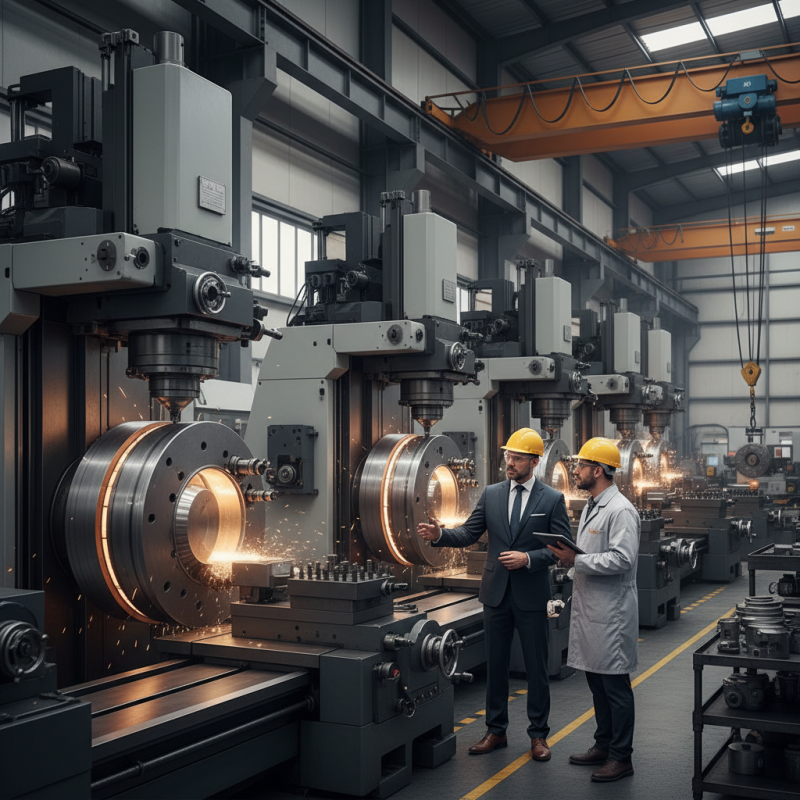
When selecting a vertical lathe, understanding its key features and specifications is essential. Vertical lathes are used for large workpieces, providing stability and precision. Key attributes include the machine's weight capacity and its spindle speed. These determine what material you can work with effectively. A heavier machine often provides better stability, reducing vibrations during operation. Consider the dimensions of your workspace, too.
Another important factor is the tooling capability. Look for lathes that offer various tool holders. This versatility allows for different machining techniques, adapting to your production needs. Pay attention to the control interface as well; a user-friendly design can significantly enhance productivity. However, not all interfaces are intuitive. It’s crucial to evaluate whether your team can quickly adapt to the machine.
Don’t forget maintenance requirements. Some machines demand extensive upkeep, which can lead to unexpected downtime. Researching common issues associated with particular models can save headaches later. Take time to analyze these elements carefully. It’s better to invest in a slightly more complex machine if it fits your long-term needs. Unforeseen challenges can arise in any choice you make, so reflect on your options thoroughly.
Identifying Different Types of Vertical Lathes and Their Applications
When considering vertical lathes, it is crucial to identify the different types available. Each type serves a unique purpose in manufacturing. For example, heavy-duty vertical lathes are designed for machining large workpieces. This is particularly beneficial in industries like aerospace and automotive. According to industry reports, the demand for heavy-duty machines is expected to grow by 5% annually.
Conversely, smaller vertical lathes excel in precision tasks. These are commonly used in medical device manufacturing and electronics. The precision offered by these machines is vital, with tolerances often within microns. Such specifications are necessary for maintaining quality standards. Recent findings show that precision vertical lathes account for nearly 30% of the market share.
Another important aspect is the automation features of these machines. Advanced models integrate CNC technology, allowing for increased efficiency and reduced human error. The automated systems can operate continuously, enhancing productivity. However, it’s essential to consider the learning curve associated with automation. Operators may require additional training. Balancing efficiency and user capabilities is a critical consideration in selecting a vertical lathe for your operations.
Evaluating Precision and Tolerance Levels for Specific Industry Needs
Choosing the right vertical lathe requires a thorough understanding of precision and tolerance levels. Different industries have unique requirements affecting the machining process. For example, aerospace components often demand tolerances as tight as ±0.005 mm, while automotive parts may operate within ±0.01 mm. This variance underscores the significance of selecting a lathe that aligns with specific industry standards.
When evaluating a vertical lathe, consider its capability to achieve necessary precision. High-quality machines typically feature rigid construction and advanced control systems. For industries requiring high precision, look for machines with thermal stability to minimize error due to temperature fluctuations. Maintaining a consistent environment can enhance results. Data suggests that a stable temperature can improve machining accuracy by up to 40%.
Tip: Always request performance data sheets during procurement. These documents provide insights into the lathe's precision history and reliability.
Another critical factor is the tolerance level you need. Often, higher precision lathes come with advanced features like adaptive control systems. These systems help to adjust parameters in real-time, maintaining desired specifications. However, be cautious; more advanced machinery usually requires specialized training for optimal use.
Tip: Invest in operator training programs. Well-trained staff can significantly reduce error rates, maintaining quality and efficiency.
Cost Analysis: Comparing Vertical Lathe Models and Their Benefits
When selecting a vertical lathe, cost is a crucial factor. Industry reports indicate that the price range for these machines varies significantly. Basic models can cost around $30,000, while advanced versions may exceed $100,000. This vast difference highlights the importance of understanding your specific needs.
Many businesses opt for higher-priced models, believing they offer superior performance. However, data suggests that mid-range models often provide similar benefits at a lower cost. According to a recent analysis from a manufacturing association, about 40% of users find satisfaction with their mid-tier option, suggesting that lower investment does not always correlate with lower quality.
Tip: Consider your production volume. If your needs are modest, a lower-cost model could suffice. Ensure you evaluate both initial purchase costs and long-term maintenance expenses.
Evaluating the benefits of each model involves more than just cost. Look at features such as precision, size, and adaptability. Each can influence productivity and operational costs. A machine that fits well into your workflow can significantly enhance efficiency, potentially reducing overall expenditure.
Tip: Always assess the total cost of ownership. This includes energy consumption, maintenance, and downtime. A more expensive machine could prove more economical in the long run if it operates more efficiently.
Maintenance Considerations for Longevity and Performance of Vertical Lathes
When selecting a vertical lathe, maintenance is key to ensuring longevity and optimal performance. Regular maintenance keeps your machine running smoothly and reduces unexpected breakdowns. Inspect the collet, spindle, and bed regularly for wear and tear. A well-maintained lathe can significantly improve efficiency and product quality.
Tips: Clean the machine daily. Accumulated chips can lead to corrosion and other issues. Lubricate the moving parts each week to ensure they function properly. This simple step can greatly enhance the lathe's lifespan.
Pay attention to the coolant system as well. Stale coolant can harbor bacteria and diminish machining quality. Change the coolant regularly and monitor its level. If you notice decreased performance, it may be time for a thorough cleaning.
Neglecting routine checks can result in costly repairs. Make a maintenance schedule and stick to it. Remember, consistent attention to detail can save time and money in the long run.
FAQS
: Heavy-duty vertical lathes handle large workpieces. Smaller variants excel in precision tasks.
Aerospace and automotive industries rely on heavy-duty vertical lathes for large-scale machining.
They are crucial in industries like medical device manufacturing. Tolerances are often within microns, ensuring high quality.
Automation increases efficiency and reduces human error. However, training is necessary for operators.
Daily cleaning and weekly lubrication of moving parts are vital. Regular inspections of collet and spindle are also important.
Stale coolant can reduce machining quality. Regular changes and monitoring are essential for optimal performance.
It can lead to costly repairs and decreased machine efficiency. A maintenance schedule helps avoid these issues.
The learning curve for automation technology can be steep. Balancing efficiency and user capabilities is important.
Conclusion
When selecting the right vertical lathe for your needs, it is essential to understand its key features and specifications. Vertical lathes come in various types, each designed for specific applications, making it crucial to identify how they align with your industry requirements. Precision and tolerance levels play a significant role, as different fields demand varying standards for quality.
In addition to evaluating the technical capabilities of vertical lathes, a thorough cost analysis is vital. Comparing different models can help you weigh their benefits against investment costs. Lastly, maintenance considerations are essential for ensuring the longevity and performance of vertical lathes in a production environment. By addressing these factors, you can effectively choose a vertical lathe that meets your operational needs.
 Fishen
