
Fishen Fishen

What is a CNC Turning Center and How Does it Work?

Time:2026-06-10 Author:Madeline
0%

In the world of precision manufacturing, the CNC Turning Center stands out as a vital tool. John Smith, a renowned expert in CNC technology, once stated, "CNC Turning Centers transform ideas into precise reality." This statement encapsulates the essence of these machines, merging innovation with accuracy.

A CNC Turning Center automates the process of shaping materials into desired forms. It employs advanced technology to achieve high precision in metalworking. Many industries rely on these machines for parts production due to their efficiency. Operators can input specifications, leading the machine to execute complex tasks seamlessly.

Despite their capabilities, CNC Turning Centers require skilled operators. Understanding the machine's functionality and programming is crucial. Errors in setup can lead to wasted material and time. Thus, ongoing training and adaptation in methods are key to maximizing efficiency and precision in production. As the industry evolves, so does the need for expertise surrounding these essential tools.
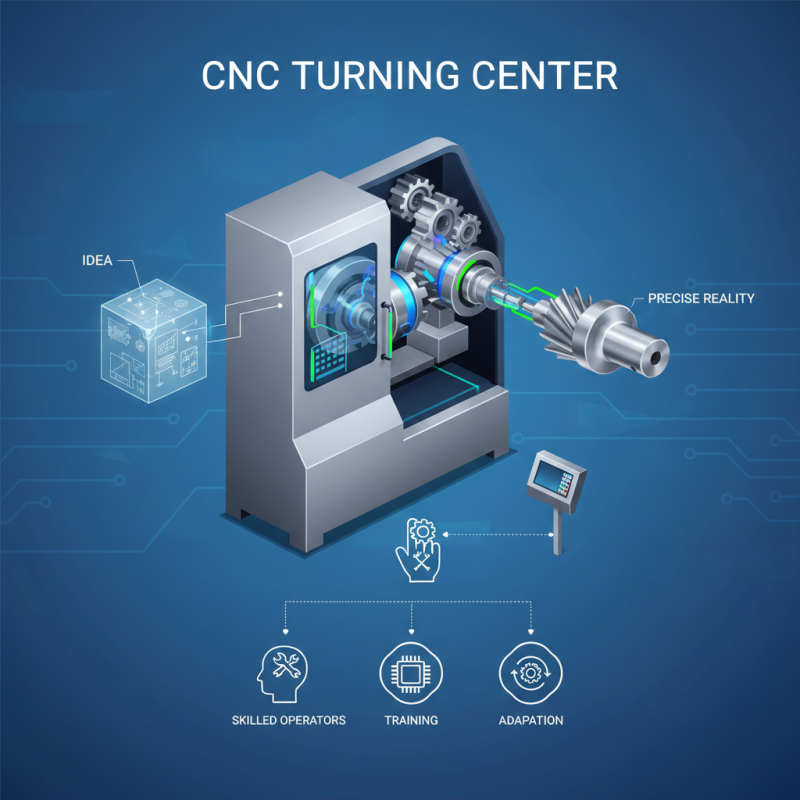
What is a CNC Turning Center and How Does it Work?

What is a CNC Turning Center?

CNC turning centers are automated machines used for metalworking. They rotate the workpiece against a cutting tool to shape it. This technology is crucial in manufacturing industries that require precision. The global CNC turning center market was valued at approximately $1.5 billion in 2022, with an expected growth rate of 5.5% from 2023 to 2030.

A CNC turning center utilizes Computer Numerical Control (CNC) to achieve high levels of accuracy. Manufacturers use CNC programs to guide the machine, ensuring that each part meets stringent specifications. The precision achieved can be within 0.001 inches. Various industries, such as aerospace and automotive, demand such accuracy. However, programming errors can lead to costly mistakes, emphasizing the need for skilled operators.

While CNC turning centers offer numerous advantages, they are not without limitations. Initial costs can be high, making investment a significant barrier for small businesses. Additionally, maintaining technological expertise is essential for effective operation. If operators lack training, efficiency may drop. Addressing these challenges requires ongoing education and adaptation within the workforce.

What is a CNC Turning Center and How Does it Work?

Feature Description
Definition A CNC turning center is a machine tool used for turning operations, providing advanced capabilities for producing complex parts.
Main Components Includes a rotating spindle, tool holders, and a control unit to program operations.
Operating Principles Utilizes computer numerical control to automate the turning process with high precision.
Common Materials Metals, plastics, and composites used for creating parts such as shafts, couplings, and fittings.
Advantages High accuracy, repeatability, and ability to produce complex geometries in less time.
Applications Widely used in industries such as automotive, aerospace, medical, and electronics.

Key Components of a CNC Turning Center

CNC turning centers play a crucial role in modern manufacturing. They automate the turning process, allowing for precision and efficiency. At the heart of a CNC turning center are key components that enable its operation. Understanding these components is essential for anyone involved in the machining industry.

The spindle is one of the most critical parts. It rotates the workpiece and is often made from high-quality steel to withstand heavy loads. A report from the International Federation of Robotics indicates that CNC machines can significantly enhance production rates, achieving up to 80% efficiency. Another vital component is the tool turret, which holds multiple cutting tools. This feature allows for quick tool changes, reducing downtime between operations.

Additionally, the CNC controller is responsible for the machine’s automation. It interprets G-code to dictate movements and operational parameters. Some reports indicate that effective programming can reduce manufacturing errors by 30%. Diagnosing issues with these components is essential; even minor misalignments can lead to significant defects in parts. Ultimately, understanding these elements provides insights into improving both the operational efficiency and outcome quality of machining processes.

How CNC Turning Centers Operate

CNC turning centers are vital in modern machining. They streamline the production process by automating tasks that were once manual and time-consuming. A CNC turning center operates by rotating the workpiece against a fixed cutting tool. This method ensures precision and repeatability, critical factors in high-volume manufacturing.


Data from the International Federation of Robotics shows that the CNC machine market is projected to grow by 7% annually. These machines enhance operational efficiency and reduce material waste. However, operators must constantly monitor outputs and adjust settings. Neglecting these factors can lead to inaccuracies and increased costs.


Moreover, the versatility of CNC turning centers allows for the machining of complex geometries easily. They can create intricate parts quickly, but it's essential to acknowledge that programming errors can occur. Regular training for operators is necessary to minimize these issues. Investing in skilled personnel alongside technology proves crucial for maximizing productivity in any CNC workshop.

Applications of CNC Turning Centers in Industry

CNC turning centers play a vital role in modern manufacturing. These machines are highly efficient in producing a wide array of components. They excel in crafting cylindrical parts, such as shafts and fittings, primarily used in automotive and aerospace industries. The ability to achieve precise tolerances makes them indispensable in these sectors.

Industries harness the power of CNC turning centers for various applications. For instance, in the medical field, they manufacture intricate components for surgical instruments. The high level of accuracy is crucial for ensuring safety and performance. Furthermore, CNC turning centers aid in producing small batches quickly, allowing companies to respond to market needs efficiently.

Despite their advantages, challenges persist. Operators need to ensure precise setup and maintenance. A minor error in programming can lead to costly mistakes. Additionally, keeping up with technological advancements in CNC machinery requires continuous learning. Thus, while CNC turning centers enhance productivity, they also demand a commitment to quality and skill development.

Benefits of Using CNC Turning Centers for Manufacturing

CNC turning centers offer significant advantages in modern manufacturing. These machines combine precision, speed, and versatility. According to a report by the International Federation of Robotics, CNC technology can enhance productivity by up to 30%. This improvement stems from their ability to perform multiple operations in one setup, reducing production time.

Using CNC turning centers minimizes human error. A study by the National Institute of Standards and Technology revealed that automation can reduce defect rates by up to 90%. This precision is crucial in industries like aerospace and medical devices. CNC machines can consistently create complex parts with tight tolerances. However, the reliance on technology also raises concerns about skill gaps in the workforce.

Cost savings are another compelling benefit. A report from IndustryWeek highlighted that companies utilizing CNC machining can save up to 20% on labor costs. While initial investments can be high, the long-term efficiency often outweighs these costs. Yet, businesses must continually evaluate their processes. Relying solely on machines can stifle creativity and innovation in design. Balancing automation with skilled craftsmanship is essential for sustainable manufacturing.

Benefits of Using CNC Turning Centers for Manufacturing

FAQS

: What is a CNC Turning Center?

: A CNC turning center is an automated machine for metalworking. It rotates the workpiece against a cutting tool.

How does a CNC Turning Center achieve precision?

It uses Computer Numerical Control (CNC) programs to guide operations. This can yield accuracy within 0.001 inches.

In which industries are CNC Turning Centers widely used?

They are essential in aerospace, automotive, and medical industries for producing precise components.

What challenges do operators face with CNC Turning Centers?

Operators must ensure accurate setup and maintenance. Programming errors can lead to costly mistakes easily.

How do CNC Turning Centers affect manufacturing productivity?

They improve productivity by performing multiple operations in one setup, potentially enhancing efficiency by up to 30%.

What are the cost considerations for CNC Turning Centers?

Initial costs can be high. However, long-term labor savings can reach up to 20%, making them beneficial overall.

Are there any skill gaps in the workforce related to CNC technology?

Yes, reliance on automation raises concerns about skill gaps among workers, highlighting the need for ongoing training.

Why is balancing automation and craftsmanship crucial?

While automation enhances efficiency, it can stifle creativity in design. Skilled craftsmanship remains vital for innovation.

Can CNC Turning Centers help meet market demands?

Yes, they allow for rapid production of small batches, enabling companies to respond quickly to market needs.

What is the future outlook for the CNC turning center market?

The market is expected to grow at a rate of 5.5% from 2023 to 2030, reflecting continued demand and innovation.

Conclusion

A CNC Turning Center is an advanced manufacturing tool that automates the turning process, allowing for precise and efficient shaping of materials. These centers consist of key components such as a spindle, tool holder, and control panel, all working in harmony to ensure accurate machining. The operation of a CNC Turning Center involves programming the machine to perform specific tasks, enabling the production of complex geometries with minimal human intervention.

The applications of CNC Turning Centers in various industries are vast, ranging from automotive to aerospace, as they enhance productivity and ensure repeatable quality. The benefits of using CNC Turning Centers include reduced production time, increased precision, and the ability to produce intricate designs that meet stringent specifications. Overall, CNC Turning Centers represent a significant advancement in manufacturing technology, driving efficiency and innovation across many sectors.

Madeline

Madeline

Madeline is a dedicated marketing professional with a wealth of expertise in our company's core offerings. With a keen understanding of the industry, she brings a unique perspective to her role, consistently delivering high-quality content that highlights the superior aspects of our products. As......