 Fishen
Fishen
Fishen
Choosing a Vertical Lathe Machine in 2026 requires more than comparing spindle diameter and purchase price. The right machine must match your workpiece size, material, tolerances, floor space, and production rhythm. A 1,600 mm table may handle large castings, but it can become inefficient for smaller batches. A compact machine may save space, yet lack the rigidity needed for heavy interrupted cuts. These practical differences often decide whether equipment supports profit or creates daily frustration.
This guide examines the details experienced buyers should verify before signing an order. We will consider maximum turning diameter, spindle speed range, ram travel, CNC control, motor power, tool capacity, chip removal, and operator access. Thermal stability also matters when accuracy must remain consistent after hours of cutting. Ask for actual test-cut results, not only catalog figures. Inspect sample surfaces, measure repeatability, and confirm service response in your region. A machine can look impressive under showroom lighting. Real performance appears during demanding work. Some recommendations remain uncertain because every workshop has different materials, operators, and maintenance habits. That uncertainty deserves honest attention. By comparing technical evidence with production experience, buyers can select a Vertical Lathe Machine that remains reliable beyond the first year.
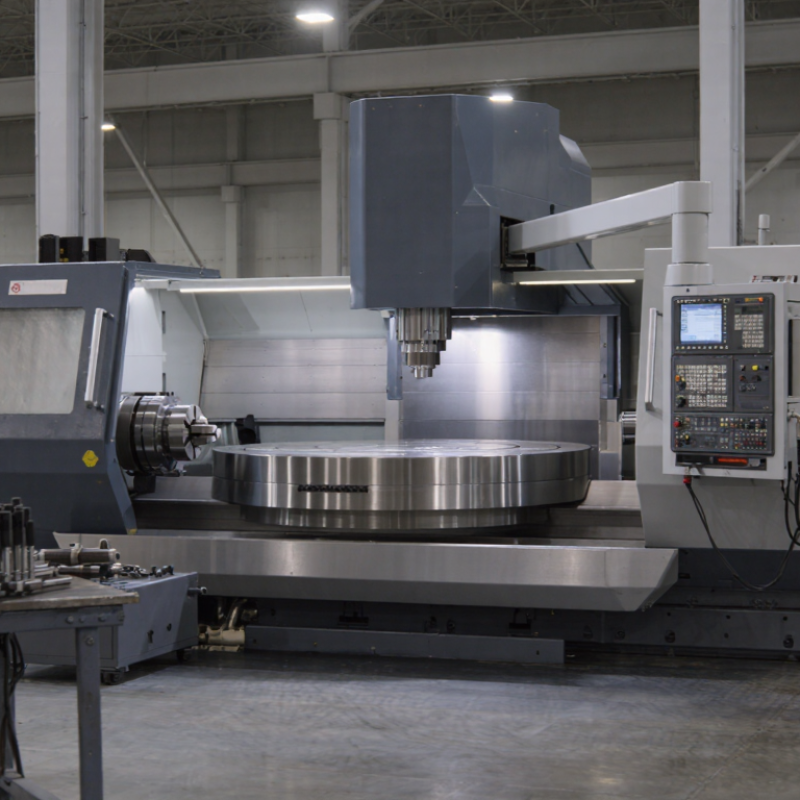
A vertical lathe machine, also called a vertical turning lathe, machines large or heavy workpieces around a vertical spindle. The workpiece sits on a rotating table or faceplate. Clamps hold it securely while the spindle turns. A tool turret moves across the workpiece surface. It can perform facing, turning, grooving, boring, and drilling operations. Chips often fall away because of gravity. That sounds simple, but chip control still requires careful planning.
During operation, the control system coordinates spindle speed, feed rate, and tool movement. An operator sets the cutting path and checks the workholding arrangement before machining begins. A rigid column reduces vibration, especially when cutting castings or large steel components. I have found that real performance depends on setup quality, not only motor power. A powerful machine can still produce poor surfaces when the fixture flexes.
When choosing a vertical lathe in 2026, match the table diameter and maximum swing to your largest planned part. Leave working clearance. Check the permitted table load, turning height, spindle torque, turret capacity, and axis travel. Automatic tool measurement can reduce setup errors. Enclosed guarding, reliable interlocks, and clear visibility also matter in daily production. Review service access and control-system support before purchase. A specification sheet may look impressive, yet it can hide limitations in low-speed torque or thermal stability. Test a representative workpiece if possible. That step may reveal more than a polished demonstration.
| Selection Dimension | What It Means | Typical 2026 Specification Range | How to Choose |
|---|---|---|---|
| Machine Definition | A vertical lathe, also called a vertical turning lathe, holds the workpiece on a horizontal rotating table while the cutting tool moves mainly along vertical and radial axes. | Designed primarily for large-diameter, heavy, short-to-medium-height parts. | Choose this layout when workpiece diameter, weight, or loading stability is more important than long axial length. |
| How It Works | The workpiece is clamped to a rotary table. The table rotates around the vertical Z-axis, and the tool cuts the outside diameter, inside diameter, face, shoulder, groove, or taper. | Common CNC axis configuration: X-axis for radial movement and Z-axis for vertical movement; optional C-axis for positioning or contouring. | Select a 2-axis model for standard turning and a C-axis or live-tool model for drilling, milling, or indexed features. |
| Maximum Turning Diameter | The largest diameter that can be machined without interference from the column, ram, toolholder, or enclosure. | Approximately 800–6,000 mm for common industrial vertical turning machines; larger special-purpose machines are available. | Allow at least 10–20% extra diameter capacity for fixtures, tool clearance, and future workpieces. |
| Maximum Turning Height | The maximum usable distance between the table surface and the highest tool position. | Approximately 600–3,000 mm, depending on machine construction and ram travel. | Measure the complete loaded part, including chucking devices, fixtures, and required tool clearance. |
| Table Diameter | The diameter of the rotating table that supports and drives the workpiece. | Approximately 630–4,000 mm for many production and heavy-machining applications. | Choose a table large enough for the part and fixture while maintaining sufficient clamping area and rigidity. |
| Maximum Workpiece Weight | The permitted static and rotating load supported by the table, bearings, drive system, and foundation. | Approximately 1–100 tonnes; heavy-duty machines can be rated above this range. | Use the total mass of the workpiece, fixture, chuck, and cutting forces. Do not select exactly at the rated limit. |
| Table Speed | The rotational speed of the table, normally controlled to maintain the required cutting speed at the tool. | Approximately 1–800 rpm, with large-diameter machines generally operating at lower maximum speeds. | Check the speed range against material, diameter, insert recommendations, and required surface finish. |
| Spindle or Table Drive Power | The motor capacity available to overcome cutting resistance and maintain speed under load. | Approximately 15–250 kW for many industrial machines. | Prioritize torque at low speed for cast iron, steel forgings, large diameters, and heavy roughing cuts. |
| Ram and Cross-Rail Travel | The movement range of the tool ram and cross-rail determines access to different cutting areas. | Ram travel commonly ranges from about 500–2,000 mm; cross-rail height depends on machine size. | Verify access to the top face, inner bore, outer wall, grooves, and all required machining locations. |
| Tooling System | The toolholder, turret, or ram-mounted system determines tool capacity, rigidity, and changeover time. | Single-tool rams, multi-station turrets, powered toolholders, and automatic tool changers are common options. | Use a rigid fixed tool system for heavy turning and powered tooling when drilling or milling must be done in the same setup. |
| Positioning and Turning Accuracy | Accuracy depends on machine geometry, thermal stability, ball screws or linear scales, fixturing, tooling, and process control. | Typical positioning accuracy may be approximately ±0.01–±0.05 mm; actual cutting accuracy varies by machine size and conditions. | Request test-cut results and inspection data for the actual material, diameter, tolerance, and surface-finish requirements. |
| Surface Finish Capability | Surface finish is affected by rigidity, insert geometry, feed rate, cutting speed, vibration, coolant, and workpiece stability. | A typical finish-turning process can achieve roughly Ra 1.6–6.3 µm; finer results require controlled conditions and suitable tooling. | Select based on the required drawing tolerance and Ra value rather than machine speed alone. |
| CNC Control and Connectivity | The control system manages axis movement, spindle speed, tool offsets, programs, alarms, and production data. | Common features include conversational programming, USB or network transfer, tool-life monitoring, and production data collection. | Choose connectivity that matches your factory network, data-security policy, maintenance capability, and automation plans. |
| Automation Options | Automation can include automatic tool changing, pallet systems, probing, chip conveyors, part measurement, and robotic loading. | Manual loading is common for very heavy parts; automated loading is more practical for repeatable, high-volume work. | Calculate payback using cycle time, loading time, batch size, labor cost, and required unattended production hours. |
| Coolant and Chip Management | Coolant systems control cutting temperature and chip evacuation, while conveyors remove chips from the work area. | Options include flood coolant, high-pressure coolant, filtration, chip conveyors, and oil-mist collection. | Specify the system according to material, chip type, cutting volume, coolant pressure, and environmental requirements. |
| Installation Requirements | A vertical lathe requires adequate floor space, foundation strength, electrical capacity, lifting access, and service clearance. | Installed machine mass can range from several tonnes to more than 100 tonnes for large heavy-duty models. | Confirm floor loading, foundation drawings, power supply, transport route, crane capacity, and maintenance access before ordering. |
| Safety Features | Safety systems protect operators from rotating parts, ejected workpieces, chips, coolant, and unexpected machine movement. | Typical features include full guarding, door interlocks, emergency stops, overload protection, chuck or fixture monitoring, and safe access controls. | Verify compliance with applicable workplace regulations and require documented risk assessment and operator training. |
| Best Application Fit | Vertical lathes are well suited to large gears, wheels, flanges, rings, valve bodies, bearing housings, and other wide rotational components. | Most effective when the part has a large diameter-to-height ratio and benefits from gravity-assisted loading. | Consider a horizontal lathe instead when parts are long, slender, or mainly require extended axial turning. |
| 2026 Buying Priority | The best machine is determined by the complete production process, not by maximum size or motor power alone. | Key factors include capacity, torque, rigidity, accuracy, cycle time, automation, energy use, serviceability, and total cost of ownership. | Prepare representative drawings, materials, tolerances, batch sizes, tooling plans, and cycle-time targets before requesting quotations. |
Note: The numerical ranges are typical industry planning values. Actual specifications, load limits, accuracy, speed, and achievable surface finish vary by machine size, configuration, workpiece material, tooling, and installation conditions.
Match the working envelope with your largest real workpiece. Measure diameter, height, and clearance carefully. Do not rely on optimistic future estimates.
Single-column machines suit moderate diameters and compact floors. Double-column machines usually offer greater rigidity for wide, heavy components. Larger frames also increase installation cost, energy use, and setup time.
Examine the turret, ram travel, spindle drive, and table load rating. A fixed ram may improve cutting stability. A movable ram can reach uneven surfaces more easily.
CNC supports repeatable profiles and automated tool changes. Manual systems may suit repairs and low-volume production. The best choice depends on workload, skills, and programming time.
Ask for measured positioning accuracy, spindle runout, and thermal test results. Catalog claims are not enough. Request inspection reports with serial numbers and measuring equipment details.
Request a test ring, heavy cutting, and repeated positioning after warm-up. Check cast-iron stability, lubrication, coolant delivery, and service access. A clean showroom proves little.
Confirm spare-part availability for at least ten years. Ask about response times, training, warranty exclusions, and commissioning support. Speak with two existing users. Their comments may be less polished, but more useful.
Confirm support for robot loading, probing, data collection, and stable communication. Automation can reduce handling time. It also adds sensors, programming demands, and service requirements.
Check chip evacuation, operator visibility, guarding, and tool access. Poor chip flow can create avoidable maintenance problems. I might still overlook something. Record every trade-off before purchasing.
Choosing a Vertical Lathe Machine in 2026 requires a clear understanding of your machining goals, workpiece dimensions, material types, and expected production volume. A vertical lathe secures large or heavy components on a horizontal worktable while cutting tools move vertically or horizontally to perform turning, boring, drilling, and finishing operations. The right choice depends on specifications such as maximum turning diameter, workpiece height, spindle speed, spindle power, table load capacity, axis travel, and control system compatibility.
You should also compare single-column and double-column configurations, manual and CNC models, and standard machines with automated or multi-function options. Accuracy and productivity depend on features including rigid construction, thermal stability, reliable guideways, precise feedback systems, efficient chip removal, tool-changing capability, and user-friendly controls. Finally, evaluate potential manufacturers by examining engineering expertise, customization support, quality management, installation services, spare-parts availability, training, warranty terms, and long-term technical support. A careful comparison will help you select a dependable machine that delivers stable performance, efficient production, and consistent machining quality.
