
Fishen Fishen

China Top Laser CNC Machine Manufacturers

Time:2026-11-18 Author:Isabella
0%

China’s laser equipment industry is expanding alongside demand for precise, flexible metal fabrication. A Laser Cnc Machine can cut stainless-steel panels, aluminum brackets, and intricate sheet-metal parts with a focused beam and programmed toolpaths. The result depends on more than laser power. Buyers also assess motion accuracy, software, service response, and performance across different materials.

Market figures help explain the interest, but they need context. Grand View Research estimated the global laser cutting machine market at about USD 5.4 billion in 2023 and projected continued growth through 2030. These are analyst estimates, not guarantees for individual manufacturers. Separately, the International Federation of Robotics reported 276,288 industrial robot installations in China in 2023, representing roughly 51% of worldwide installations. That figure describes robotics, not laser cutters, but it signals the scale of China’s broader automation ecosystem.

Scale alone is not proof of quality. A supplier’s brochure may list impressive speed, yet real results depend on material thickness, assist gas, maintenance, and operator skill. This guide examines leading China-based manufacturers through practical criteria: machine configuration, stated specifications, export support, and evidence of reliable service. Some comparisons remain difficult. Public data is uneven, and a low purchase price can hide costly downtime. That deserves a closer look.
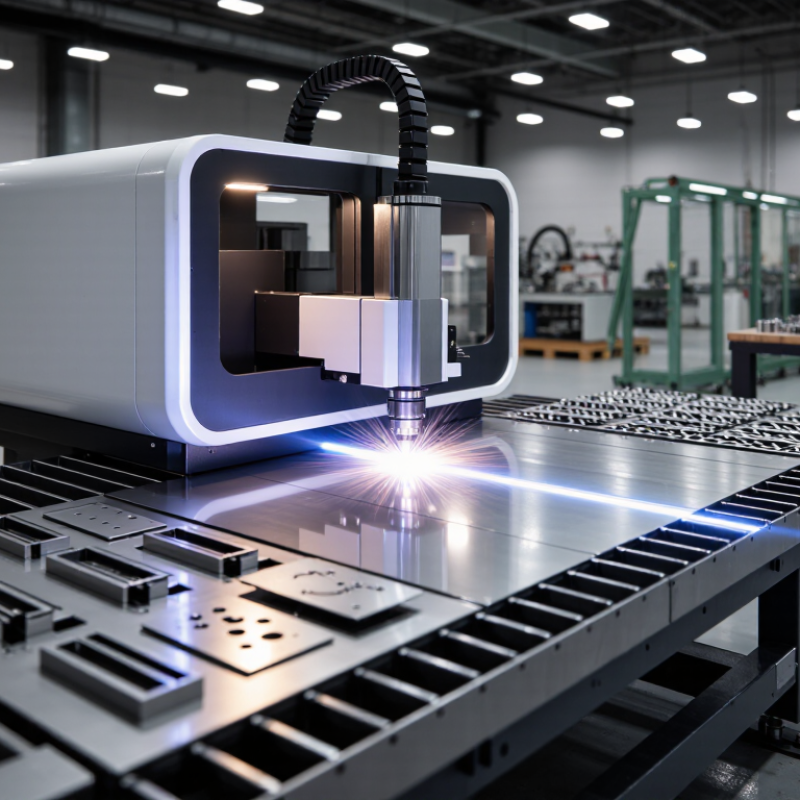
China Top Laser CNC Machine Manufacturers

China’s CNC Laser Machine Sector: Product Scope and Key Applications

China’s CNC laser machine sector spans fiber-laser sheet cutting, tube cutting, laser welding, marking, and surface cleaning systems. Typical configurations pair a laser source with CNC motion control, a cutting head, extraction equipment, and software for nesting parts. On a factory floor, that can mean cutting steel panels for electrical cabinets or trimming stainless-steel tubes for equipment frames. Power, bed size, and automation level vary considerably. Not every workshop needs a high-power system.

Key applications include sheet-metal fabrication, automotive components, agricultural machinery, appliance enclosures, and precision metal parts. The International Federation of Robotics reported 276,288 industrial robot installations in China in 2023, about 51% of global installations that year, in World Robotics 2024. This is not a laser-machine sales figure, but it signals the scale of China’s manufacturing automation ecosystem. Laser cutting lines increasingly connect with loaders, sorting systems, and robotic handling. The fit depends on material thickness, part geometry, production volume, and operator skill. One detail is often underestimated: assist-gas use and fume extraction affect running costs and shop conditions. Specifications on paper do not guarantee stable production; real cutting trials matter.

Machine Types by Laser Source: 1,064 nm Fiber and 10.6 μm CO₂

At 1,064 nm, fiber laser CNC machines are commonly selected for marking, cutting, or engraving metals. Their wavelength couples efficiently with many metal surfaces, including stainless steel and aluminum. A fine focal spot can produce narrow marks and clean edges, but results depend on power, speed, focus, and material thickness. That matters. A small focus error may leave a rough edge or inconsistent mark. Buyers should compare sample cuts using their actual materials, not rely only on rated power.

CO₂ machines operate at 10.6 μm and are often suited to nonmetals such as wood, acrylic, paper, and some textiles. They can create smooth edges in acrylic and detailed patterns in wood, though smoke extraction and lens cleanliness affect finish quality. Bare metals are generally a poor fit without a suitable coating or specialized setup. Not always. Material blends and coatings can complicate the choice. It is easy to oversimplify wavelength charts; confirm compatibility, cutting speed, kerf width, and maintenance needs with practical tests before specifying a machine.

How CNC Laser Cutting Works: Axes, Assist Gases, and Power in kW

A CNC laser cutter moves the cutting head along programmed X and Y axes while the Z axis maintains the focal distance. On a flat sheet, the gantry must stay square as it accelerates and changes direction. Small errors can leave rounded corners or uneven kerfs. Some systems add a rotary axis for tubes, but flat-sheet cutting depends mainly on accurate motion and stable focus.

Assist gas flows through the nozzle into the cut. Oxygen can support cutting in some steels, while nitrogen helps limit oxidation on suitable materials. Compressed air may be practical for certain jobs, though its results depend on material, thickness, and required edge quality. Watch the nozzle gap and gas pressure. A clogged nozzle can disturb the flow and spoil an otherwise sound setup.

Laser power is rated in kilowatts, but a higher figure does not guarantee a better edge. Power, feed rate, focus position, nozzle size, and gas settings work together. For example, a 3 kW source may cut a given sheet differently across machines because their optics and motion systems differ. Test a small coupon, inspect the underside for dross, and adjust one setting at a time. The first pass may not be clean; that is useful evidence, not a verdict.

China Top Laser CNC Machine Manufacturers - How CNC Laser Cutting Works: Axes, Assist Gases, and Power in kW

General reference for CNC laser-cutting systems and processes. Values are typical examples, not guaranteed machine specifications; suitable settings depend on the machine, material grade, thickness, optics, nozzle, and cut quality requirements.

Dimension Typical Configuration or Range How It Affects Cutting
CNC motion axes X and Y move the cutting head across the sheet; Z controls the head-to-material distance. A flat-sheet machine commonly uses three controlled axes. The CNC coordinates axis motion with laser output and gas flow to follow the programmed contour. Automatic Z-height control helps maintain the cutting focus distance.
Additional axes Rotary A or B axes may be added for tube cutting or bevel-head movement. The available arrangement depends on machine design. Rotary axes allow the cutting head or workpiece to move around a tube or create angled edges; they are not required for ordinary flat-sheet cutting.
Laser power Industrial fiber-laser systems are commonly offered across roughly 1–20 kW. Lower-power systems are generally used for thinner sections, while higher power can support faster cutting or thicker sections. Power is the laser’s rated output, measured in kilowatts (kW). More power does not determine cut quality by itself; material, focus, speed, gas, and machine setup also matter.
Laser source Fiber lasers are widely used for metal sheet and tube cutting. CO₂ lasers are also found in some installed systems and applications. The source type affects wavelength, absorption, system design, and maintenance requirements. Material and application suitability should be checked for the specific system.
Oxygen assist gas Oxygen is commonly used for cutting mild steel. Supply pressure is often relatively low, approximately 0.5–2 bar, depending on the setup. Oxygen supports an exothermic reaction that adds heat to the cut. It can improve cutting of mild steel, but the cut edge is oxidized.
Nitrogen assist gas Nitrogen is often used for stainless steel and aluminum when an oxide-free or cleaner edge is desired. High-pressure cutting commonly uses approximately 10–25 bar. The gas expels molten material from the kerf and helps limit oxidation. Required pressure varies with material thickness, nozzle, and cutting conditions.
Compressed-air assist Filtered, dry compressed air may be used for some applications. Cutting systems can require pressures around 8–16 bar, subject to the machine and material. Air can be a practical alternative for suitable jobs, but its oxygen content may affect edge oxidation and finish. Air quality and stable pressure are important.
Focus and nozzle The focal position and nozzle orifice are selected for the material, thickness, gas, and process recipe. Correct focus concentrates energy where needed, while a centered nozzle directs assist gas into the kerf. Incorrect setup can cause dross, poor edge quality, or unstable cutting.
Kerf and cutting path The kerf is the narrow material slot removed by the cut. Its width varies with the beam, focus, material, and process settings. CNC toolpaths account for kerf compensation so parts can meet their intended dimensions. Small holes and tight corners may require adjusted speed or power.
Cutting speed There is no single speed range that applies to all jobs; speed is set according to material type, thickness, laser power, assist gas, and desired edge quality. Excessive speed can prevent complete penetration, while speed that is too low can increase heat input and affect the edge. Test cuts and validated process settings help establish a suitable value.

Comparing Leading Chinese Manufacturers: Capacity, Certifications, and Service

When comparing leading Chinese laser CNC machine manufacturers, look beyond advertised output. Ask how many machines are assembled each month and whether that capacity includes your configuration. A workshop visit or live video call can reveal practical details: organized cable runs, guarded test areas, and machines cutting sample sheets. Request a sample using your material and thickness. One impressive demonstration is not enough.

Certifications should match the machine, its components, and the destination market. Check certificate numbers, issuing bodies, and model coverage rather than relying on a logo in a brochure. Service matters just as much. Ask about response times, spare-part availability, remote troubleshooting, and technician training. A clear parts list helps; vague promises do not. I would also ask for references from customers using similar workloads. No comparison is perfect, and quoted service speed may not reflect busy seasons.

Tips: Send the same checklist to each supplier. Record cutting speed, accuracy tolerances, warranty terms, and delivery estimates. Ask who pays for replacement parts during warranty claims. Keep answers in writing. Small omissions can become expensive later.

Buyer Evaluation: ISO 230-2 Positioning Tests, Safety, and Lifecycle Costs

For buyers comparing China-based laser CNC machine manufacturers, positioning claims need evidence, not adjectives. ISO 230-2 provides methods for testing positioning accuracy and repeatability on machine-tool axes. Request the actual test report, including axis, travel range, measurement direction, environmental conditions, and compensation settings. Ask whether results cover both forward and reverse movement. A neat chart helps. It does not tell the whole story.

Safety checks should match the machine as installed, not just its specification sheet. Inspect enclosure panels, door interlocks, emergency stops, electrical documentation, and fume extraction connections. Confirm that operators can reach controls without leaning across the cutting area. During acceptance, test the interlocks and extraction system with the intended setup. Small gaps in the process matter.

Purchase price is only one line in the budget. Estimate lens and nozzle replacement, assist gas, filtration, chiller upkeep, calibration, energy, and likely service delays. Ask how quickly common spare parts can be supplied, and what maintenance records are provided. A simple annual cost sheet is useful, though estimates can be wrong when production changes. Compare expected downtime as carefully as quoted accuracy.

FAQS

What types of CNC laser machines are commonly available?

Common systems cut sheet metal or tubes, weld parts, mark surfaces, or clean them. Configurations vary.

Which industries use these machines?

They serve sheet-metal shops, automotive component makers, agricultural machinery producers, appliance factories, and precision-parts workshops. Think steel cabinet panels or stainless-steel frame tubes.

How should a workshop choose machine power and bed size?

Match them to material thickness, part dimensions, production volume, and operator skills. Higher power is not always useful. A small shop may not need it.

Can laser cutting systems connect with factory automation?

Yes. Loaders, sorting systems, and robots can handle parts around the cutting line. The right setup depends on workload and part geometry.

What operating details are easy to overlook?

Assist-gas use and fume extraction affect costs and shop conditions. They deserve attention. Paper specifications alone cannot promise steady production.

How can buyers check a manufacturer’s production capacity?

Ask how many machines are assembled monthly and whether that figure includes your configuration. Request a live demonstration or workshop visit. One sample is not enough.

What should buyers check on machine certifications?

Verify certificate numbers, issuing bodies, and covered models. A logo in a brochure is not proof of model coverage.

What service and purchasing details should be agreed in writing?

Ask about response times, spare parts, remote support, technician training, warranty costs, and delivery dates. Send each supplier the same checklist. Keep the replies. A busy season may change service speed.

Conclusion

China’s CNC laser machine sector serves a broad range of manufacturing needs, from cutting sheet metal and tubes to processing non-metal materials. A Laser Cnc Machine uses coordinated motion axes, focused laser energy, and suitable assist gases to produce precise cuts. Fiber systems, typically operating at a wavelength of 1,064 nm, are commonly used for metals, while 10.6 μm CO₂ systems can suit a wider range of non-metal materials. Laser power, measured in kilowatts, should be matched to the material, thickness, speed, and required edge quality.

When comparing manufacturers, buyers can assess production capacity, relevant certifications, technical support, and the availability of training and spare parts. Positioning performance can be evaluated through ISO 230-2 testing, alongside practical checks of machine accuracy and repeatability. Safety features, installation requirements, maintenance needs, energy use, and expected service life also affect the total cost of ownership. A careful review of these factors helps buyers select equipment that fits their applications and long-term production goals.

Isabella

Isabella

Isabella is a dedicated marketing professional with a sharp focus on driving brand growth and engagement through strategic content creation. With an extensive background in digital marketing, she combines her passion for storytelling with her keen understanding of industry trends to deliver......