
Fishen
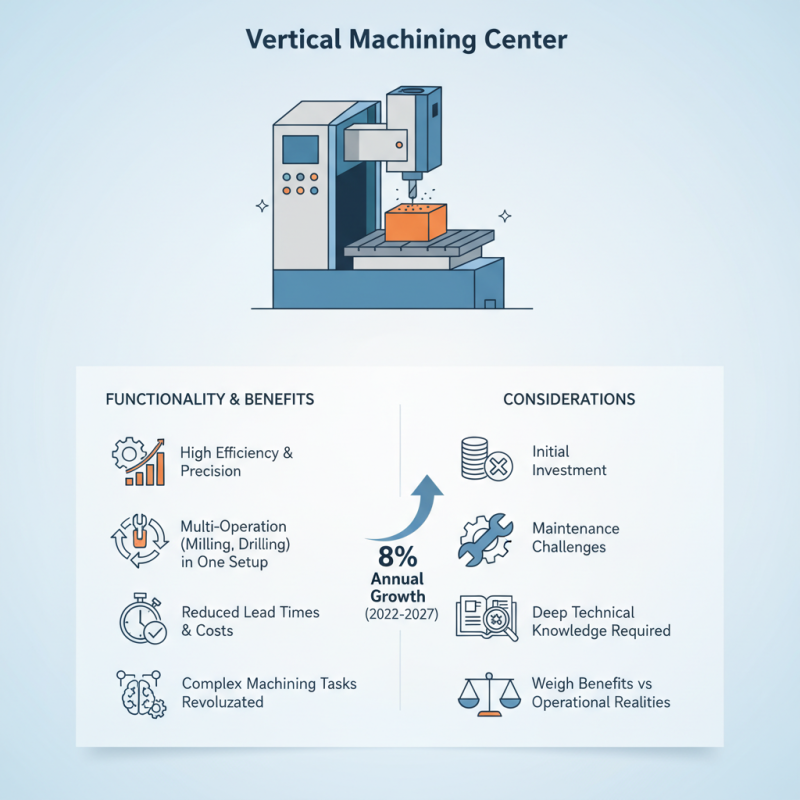
The Vertical Machining Center (VMC) has become a pivotal tool in modern manufacturing. According to the 2022 Industry Report by Market Research Future, the demand for VMCs is expected to grow by 8% annually over the next five years due to their efficiency and precision. This remarkable growth underscores the importance of understanding how VMCs operate.
Dr. James Anderson, a leading expert in CNC technology, stated, "Vertical Machining Centers revolutionize the way we approach complex machining tasks." His insight highlights not only the functionality of VMCs but also their role in enhancing productivity. VMCs can perform various operations, from milling to drilling, all in one setup. This capability significantly reduces lead times and costs.
Despite their advantages, companies must consider the initial investment and maintenance challenges associated with VMCs. Understanding these machines requires deep technical knowledge and a careful evaluation of specific needs. Thus, it’s crucial for manufacturers to weigh benefits against the realities of operating such advanced equipment.
A Vertical Machining Center (VMC) is a highly versatile machine tool that plays a crucial role in modern manufacturing. It features a vertically aligned spindle, which allows for precision machining of various materials like metal and plastic. According to a 2022 report by MarketsandMarkets, the global CNC machining market is projected to reach $85 billion by 2027, highlighting the increasing reliance on VMCs for efficient production.
The operation of a VMC involves multiple cutting tools that can perform various tasks, including drilling, milling, and tapping. The ability to automate these processes enhances both speed and accuracy, making VMCs a staple in industries such as aerospace and automotive. However, it is essential to note that while VMCs offer remarkable efficiency, they also require regular maintenance and skilled operators. Neglecting these aspects can result in decreased performance and costly downtime.
Despite their advantages, VMCs may not be suitable for every project. For some complex shapes, traditional machining techniques might be more effective. Additionally, the initial investment in a VMC can be significant. Manufacturers should carefully evaluate their needs and capabilities before making this commitment. Balancing the benefits against potential drawbacks is vital for long-term success.
A Vertical Machining Center (VMC) is a crucial machine tool in modern manufacturing. It offers precise cutting and shaping. Understanding its key components is vital for effective operation.
The spindle is a core element of a VMC. It holds the cutting tool and determines the speed and power of machining. A powerful spindle improves efficiency but adds to the cost. Another critical component is the table. It supports the workpiece and can move in multiple directions. This movement allows for versatile machining options, but it can complicate setup.
Lastly, the control system manages the machine's operations. It can be user-friendly or complex, depending on the model. Advanced systems offer features like automated tool changes, enhancing productivity. However, they require skilled operators to utilize fully. Each component plays a role in achieving accurate results. However, maintaining them poses challenges. Regular inspections and adjustments are necessary to ensure reliability.
Vertical machining centers (VMCs) are essential tools in modern manufacturing. They are designed to perform various processes like milling, drilling, and tapping. A VMC typically utilizes a vertical spindle to hold the cutting tools. This spindle orientation allows for high precision in creating complex shapes and features on various materials.
The operation of a vertical machining center involves several key components. The workpiece is securely mounted on a table, which can move in multiple axes. As the spindle rotates, it engages the tool, cutting away material with great efficiency. Many VMCs are equipped with automatic tool changers, reducing setup time. This automation enhances productivity, but not without challenges. Operators need to monitor the machine to avoid errors and ensure quality control.
Users often find that maintaining a VMC requires skill and experience. Proper setup and calibration are crucial. Mistakes could lead to wasted material or even machine damage. Operators must be vigilant and constantly refine their techniques. Learning from missteps can lead to greater efficiency in the long run. While VMCs offer advanced capabilities, they also demand a commitment to continuous improvement.
| Feature | Description | Benefits |
|---|---|---|
| Work Envelope | Typically rectangular area where workpieces are held during machining. | Allows for large and intricate parts to be machined efficiently. |
| Control System | Digital controls that guide the machining process. | Increases precision and repeatability of machining operations. |
| Tooling | Uses various cutting tools that can be exchanged automatically. | Facilitates multi-step machining in a single setup. |
| Machining Process | Involves removing material from a workpiece using rotary cutters. | Results in high-precision components tailored to specifications. |
| Versatility | Can perform multiple machining functions such as drilling, milling, and tapping. | Reduces the need for multiple machines, saving space and costs. |
Vertical machining centers (VMCs) play a crucial role in modern manufacturing. They are widely employed across various industries, including aerospace, automotive, and medical fields. These machines excel at creating complex parts with high precision. A VMC operates with a vertical spindle, which enables efficient milling, drilling, and boring tasks.
In the aerospace industry, VMCs are vital for producing intricate components like turbine blades. These parts require tight tolerances and can be crafted using advanced materials. VMCs facilitate the production of lightweight components, improving fuel efficiency in aircraft. In the automotive sector, they are used for creating engine blocks and transmission housings, contributing to overall vehicle performance.
Tips: When choosing a VMC, consider the specific needs of your project. Assessing the materials to be machined is essential. Furthermore, maintaining the machine regularly can enhance longevity and performance. While VMCs offer high precision, they might not be suited for all job types. It's important to align the machine's capabilities with the production requirements.
Medical device manufacturing is another area where VMCs shine. They create parts like surgical instruments and implants. The need for cleanliness and precision in this field makes VMCs an ideal choice. However, operators must ensure adherence to strict regulatory standards throughout the production process. Adaptability is key; adjusting machining strategies can lead to better outcomes.
Vertical Machining Centers (VMCs) are essential tools in modern manufacturing. They offer numerous benefits that enhance production efficiency. VMCs are known for their precision. They can perform complex cuts and integrate various machining processes. This versatility simplifies workflow and reduces the need for multiple machines.
One significant advantage of VMCs is their ability to handle a range of materials. From metals to plastics, VMCs can efficiently work with diverse substrates. This capability opens new possibilities for product design. Manufacturers can respond quickly to market demands. Their compact design also saves valuable shop floor space.
Moreover, VMCs often require fewer operators. This reduces labor costs, but it also highlights a challenge. Operators must have skilled knowledge to maximize these machines. Training and expertise are necessary for optimal performance. A lack of skills can lead to inefficiencies. Investing in workforce training is crucial for long-term success with VMCs.
: VMCs are used for milling, drilling, and tapping in modern manufacturing processes.
A VMC uses a vertical spindle to hold tools, cutting materials efficiently in multiple axes.
VMCs are prevalent in aerospace, automotive, and medical device manufacturing industries.
Regular maintenance improves performance and extends the life of the machine, preventing costly errors.
Operators must monitor machines closely to avoid errors, ensuring quality control during operations.
Consider the project needs, the materials to be machined, and the machine's capabilities.
They produce intricate components like turbine blades, which require precision and advanced materials.
Poor setup and calibration can result in wasted materials or damage to the machine.
Learning from past mistakes and refining skills can enhance efficiency and productivity.
Adhering to strict regulatory standards while ensuring cleanliness and precision during production is essential.
A Vertical Machining Center (VMC) is a versatile and efficient machine tool widely used in manufacturing settings for precision machining tasks. It typically features a vertical spindle orientation, allowing the machine to perform various operations such as drilling, milling, and tapping on a range of materials. Key components of a VMC include the spindle, worktable, tool changer, and control systems, which collectively facilitate its operations.
Vertical Machining Centers operate by using a combination of computerized controls and precise tooling to execute complex machining tasks. Their applications span various industries, including automotive, aerospace, and general manufacturing, where they are employed for producing intricate components. The benefits of utilizing a VMC in manufacturing are significant, including increased accuracy, reduced machining time, and enhanced productivity, making it a crucial asset for modern production environments.