
Fishen Fishen

What Is a 5 Axis CNC Machine?

Time:2026-11-11 Author:Sienna
0%

A 5 Axis Cnc machine moves a cutting tool or workpiece along five coordinated directions. Three axes provide linear movement: X, Y, and Z. Two rotary axes tilt or turn the tool, the workpiece, or both. This added motion lets a cutter approach angled surfaces and complex contours that may be difficult to reach on a standard three-axis machine. The exact movement depends on the machine’s design. Some tables rotate the part; other systems move the spindle.

That sounds simple. It isn’t. Successful five-axis machining depends on more than extra motion. Toolpath planning, machine calibration, workholding, and operator skill all affect the result. When set up well, a 5 Axis Cnc process can reduce repeated setups, improve access to multiple sides of a part, and help maintain accuracy across intricate features. For example, a turbine blade or curved mold may be machined with fewer interruptions than on a conventional setup. Still, five axes do not guarantee better parts. Poor fixturing or an unsuitable tool can introduce errors, waste material, or add unnecessary cost. This guide explains how the axes work, the main machine configurations, common applications, and factors to consider before choosing a system. It also looks at practical trade-offs, because the most advanced machine is not always the right one.
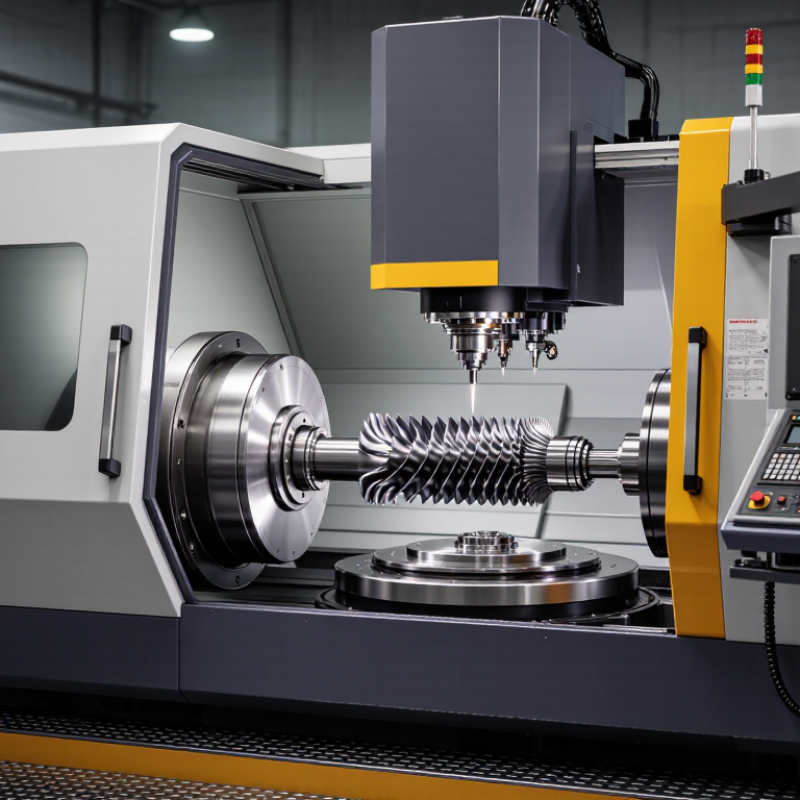
What Is a 5 Axis CNC Machine?

Core Definition and Coordinate System of a 5-Axis CNC Machine

A 5-axis CNC machine controls cutting motion along three linear axes—X, Y, and Z—and adds two rotary axes. In common coordinate conventions, A rotates around X, B around Y, and C around Z. A specific machine may use a different pair, so its documentation defines the actual arrangement. The number describes available motion, not five cutting tools. Rotary motion can tilt the workpiece, the spindle, or both.

The coordinate system gives each movement a reference. X typically runs left to right, Y front to back, and Z up and down, though machine orientation can vary. The rotary axes describe angular movement about those directions. For example, a cutter can approach a sloped pocket from the side while the table tilts the part. The controller transforms programmed coordinates as the tool or workpiece rotates. That distinction matters.

Some jobs use indexed motion: the rotary axes position the part, then the cutter moves along three axes. Simultaneous five-axis machining changes linear and rotary positions during cutting. This can reach angled faces with fewer setups, but it also makes calibration and collision checks more demanding. A practical caution: “five-axis” alone does not reveal a machine’s usable travel or accuracy. Check axis labels, pivot points, and the work offset before interpreting a program.

How Simultaneous Five-Axis Movement Works

A five-axis CNC machine combines three linear movements, usually called X, Y, and Z, with two rotary movements. The rotary axes may turn the cutting tool, the workpiece, or both, depending on the machine design. In simultaneous five-axis machining, these movements are coordinated while the cutter is engaged. The tool can travel across a part and change its angle at the same time.

Picture a curved mold cavity. The cutter moves along the surface while tilting to keep a useful cutting angle. This can reduce repeated setups and help reach angled features with a shorter tool. The motion is continuous, not a series of separate positions. Not always. Some five-axis work simply rotates the part to a fixed angle, then machines it using three axes; this is called indexed machining.

A CNC control interpolates the programmed positions, while CAM software plans the toolpath and checks for collisions. Accuracy still depends on careful setup, rotary-axis calibration, tool length, and machine rigidity. A spindle housing can strike the workpiece even when the cutter clears it. A smooth simulation is helpful, but it is not proof that the real setup is safe. Feed rate and tool deflection also matter, and a path that looks elegant on screen may need adjustment at the machine.

What Is a 5 Axis CNC Machine? — How Simultaneous Five-Axis Movement Works

Topic How It Works Why It Matters
Five controlled axes A five-axis CNC machine coordinates three linear axes (X, Y, and Z) with two rotary axes. The rotary axes are commonly identified as A, B, or C, depending on the axis of rotation. The tool or workpiece can approach a part from more directions than on a standard three-axis machine.
Linear movement: X, Y, and Z X, Y, and Z describe straight-line motion along three mutually perpendicular directions. The machine uses these movements to position the cutting tool relative to the workpiece. These axes provide the basic positioning and cutting motion used in CNC machining.
Rotary movement Rotary axes turn around a linear axis: A rotates around X, B around Y, and C around Z. A particular machine uses two of these rotary directions, with their arrangement depending on its design. Rotary motion tilts or turns the tool, the workpiece, or both, enabling access to angled surfaces and multiple sides.
Simultaneous five-axis movement During a simultaneous five-axis operation, the CNC control coordinates movement in X, Y, Z and both rotary axes at the same time. The tool can move along a programmed path while its orientation changes continuously. Continuous coordination supports machining of complex contours and changing surface angles in a single coordinated operation.
Positioning versus simultaneous machining In indexed (often called 3+2) machining, the rotary axes first position the part or tool at an angle and then remain stationary while three-axis cutting takes place. In simultaneous machining, the rotary axes can move during the cut. Both methods use five machine axes, but only simultaneous machining requires coordinated rotary movement during cutting.
Common machine configurations Some machines use a tilting and rotating table; others use a swiveling spindle head or combine a rotary table with a tilting head. The two rotary axes may therefore move the workpiece, the tool, or both. Configuration affects workholding, accessible part size, tool reach, and how the machine approaches a surface.
Typical applications Five-axis machining is used for parts with compound curves, angled features, deep cavities, or several faces that benefit from fewer setups. Examples include turbine components, impellers, molds, and complex medical or aerospace parts. Reducing repositioning and repeated setups can help maintain feature alignment and improve access, depending on the part and process.
Programming and setup Simultaneous machining generally requires a suitable CNC control, a defined machine configuration, and CAM toolpaths that account for tool orientation, rotary motion, and collision risks. Accurate machine setup and simulation help verify the toolpath and avoid collisions between the tool, workpiece, fixture, and machine.

Note: Axis naming, travel limits, and the roles of the rotary axes vary by machine configuration. “Five-axis” describes the number of controlled motion axes, not a guarantee that all five move simultaneously in every operation.

Common Machine Configurations and Their Differences

A 5-axis CNC machine adds two rotary movements to the three linear axes. Where those rotary axes sit defines the machine’s configuration. In a trunnion, or table-table, layout, the workpiece rests on a tilting and rotating table. This suits compact parts that need machining on several sides. However, the table and fixture reduce usable workspace, and tall parts may collide with the machine enclosure.

A head-table machine combines a rotating table with a swiveling spindle head. It can handle larger workpieces than some trunnion setups, though its reach depends on head angle and tool length. In a head-head configuration, both rotary axes are in the spindle head, while the workpiece stays fixed. That can help with heavy parts. But tool clearance and machine rigidity deserve careful checks. Different manufacturers may use different names for similar layouts, so inspect the actual axis motions rather than relying on labels. That detail matters. For a real job, compare part dimensions, fixture height, required cutting angles, and access to the surfaces. A machine that reaches every face on paper may still need awkward setups. There is no universal winner. The best choice can be less obvious than the catalog suggests.

What Is a 5-Axis CNC Machine? Common Machine Configurations and Their Differences

All three configurations combine three linear axes with two rotary axes. The difference is where those rotary axes are located: table-table machines place both on the table, head-head machines place both on the spindle head, and head-table machines split them between the two. Axis naming and exact machine design can vary. “3+2” and simultaneous five-axis describe how the axes move during machining, not where the rotary axes are mounted.

Essential Components, Tooling, and Control Systems

A 5-axis CNC machine combines three linear movements with two rotary movements. Its exact layout depends on whether the rotary axes sit in the table, the spindle head, or both. The frame must resist cutting forces, while the spindle supplies controlled rotation and torque. Rotary joints and encoders report position to the control system. Small details matter.

Tooling choices affect reach, rigidity, and surface finish. A short tool usually flexes less, but deep pockets may require extra stickout. That added length can invite vibration or collision with the part. Holders must also provide secure clamping and accurate runout. For a complex part, programmers often check tool clearance before cutting, not just the cutter path.

The control system coordinates axis motion and transforms programmed coordinates as the rotary axes move. It may use tool-center-point control to keep the cutter positioned relative to the workpiece. Work offsets, tool-length measurements, and rotary-axis calibration all influence accuracy. Simulation can reveal many collisions, though it cannot replace careful setup checks. It is easy to trust a screen too much. A clean model may omit a clamp, a worn tool, or a slightly misplaced blank.

Typical Applications and Factors Affecting Machine Selection

A five-axis CNC machine moves a cutting tool or workpiece along three linear axes and two rotary axes. This lets the cutter reach angled surfaces without repeated manual repositioning. Typical applications include machining turbine blades, aerospace housings, sculpted molds, and medical components with curved features. A single setup can reduce alignment errors and improve access to complex surfaces. Setup matters.

Machine selection should start with the part, not the axis count. Check the work envelope against the largest component, including room for fixtures and tool movement. A compact machine may handle small impellers well but struggle with a long housing. Rotary-axis range, table load, spindle power, and machine rigidity also affect results. For tight tolerances, thermal stability and proven accuracy matter more than impressive specifications alone.

Software and operator experience deserve equal attention. CAM systems must generate reliable toolpaths, while the postprocessor must match the machine’s control and kinematics. Ask for a test cut using representative material and geometry. It can reveal chatter, tool reach problems, or awkward setup steps before purchase. Five-axis machining is not automatically faster; programming and fixturing can add time. That trade-off is easy to underestimate. A less complex machine may be the better fit when most parts use only a few accessible faces.

FAQS

What does “five-axis” mean on a CNC machine?

It describes three linear axes and two rotary axes. It does not mean the machine uses five cutting tools. The rotary axes can tilt the workpiece, spindle, or both.

Which directions do the X, Y, and Z axes represent?

They commonly run left to right, front to back, and up and down. Actual orientation can vary, so check the machine documentation.

What is the difference between indexed and simultaneous five-axis machining?

Indexed machining positions the rotary axes before cutting along the linear axes. Simultaneous machining moves rotary and linear axes during cutting. That requires careful checks.

How do trunnion, head-table, and head-head machines differ?

A trunnion tilts and rotates the workpiece on a table. A head-table machine combines a rotating table with a swiveling spindle head. A head-head machine places both rotary axes in the spindle head.

What parts commonly benefit from five-axis machining?

Turbine blades, aerospace housings, sculpted molds, and curved medical components are common examples. Angled surfaces may be reached with fewer manual repositioning steps.

What should I check when selecting a five-axis machine?

Compare the part’s dimensions with the work envelope, including fixture height. Also check rotary range, table load, spindle power, rigidity, and tool access. A catalog figure is not the whole story.

Can five-axis machining always reduce production time?

No. Programming, fixturing, and collision checks can add time. For parts with only a few accessible faces, a simpler machine may fit better.

How can I confirm that a machine suits a specific job?

Check that the postprocessor matches the machine’s control and kinematics. Request a test cut using representative material and geometry. It may reveal chatter or awkward tool reach. Worth checking.

Conclusion

A 5 Axis Cnc machine moves a cutting tool or workpiece along three linear axes—X, Y, and Z—while rotating around two additional axes. This combination lets the tool approach a part from multiple directions, helping produce complex shapes with fewer setups. In simultaneous five-axis machining, all five axes can move together, so the tool maintains a suitable angle as it follows a programmed path. This can improve access to curved surfaces and support smooth, accurate machining.

Machines commonly use a table that tilts and rotates, a swiveling spindle head, or a combination of both; each arrangement affects workpiece size, reach, and setup options. Key elements include the machine structure, spindle, rotary axes, cutting tools, workholding, and a control system that coordinates motion and manages tool paths. Five-axis machines are used for intricate parts, contoured surfaces, and components that benefit from machining on several sides. Choosing a machine depends on part geometry, required accuracy, production needs, available space, tooling, and operator expertise.

Sienna

Sienna

Sienna is a skilled marketing professional with a deep expertise in our company’s core products and services. With a passion for innovation and detail, she plays a pivotal role in crafting insightful blog posts that not only highlight the unique features of our offerings but also provide valuable......