
Fishen Fishen

Why Choose a 5 Axis Horizontal Machining Center?

Time:2026-09-24 Author:Aria
0%

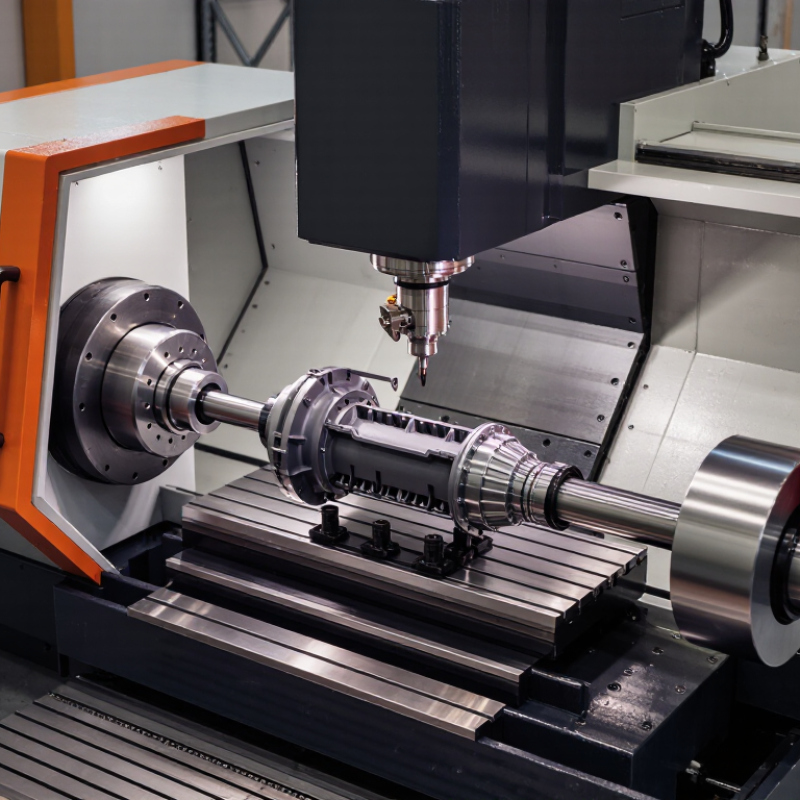
A 5 Axis Horizontal Machining Center can reach several sides of a component in fewer setups, while its horizontal spindle and pallet system support practical, repeatable production. Picture a turbine housing held once as the tool approaches angled ports, deep cavities, and contoured faces. Fewer transfers can reduce alignment risk, though they do not guarantee shorter cycle times. Tool access, programming skill, workholding, and machine utilization still matter.

The opportunity sits within a much larger manufacturing shift. Grand View Research estimated the global CNC machine market at USD 101.22 billion in 2023; that figure covers CNC equipment broadly, not five-axis horizontals alone. It signals industrial scale, not proof that every shop needs this investment. NIST researcher and manufacturing expert Dr. Yoram Koren described reconfigurable manufacturing systems as “designed at the outset for rapid change in their structure.” His work is not a sales claim for any one machine, but it points to a useful buying question: can the equipment adapt as parts and production needs change?

This guide examines where five-axis horizontal machining earns its floor space, what its capabilities demand from operators, and which costs deserve scrutiny. A machine can be impressive. The hard part is making it productive on real jobs. Industry reports rarely capture that shop-floor gap.
Why Choose a 5 Axis Horizontal Machining Center?

What Is a 5-Axis Horizontal Machining Center?

A 5-axis horizontal machining center is a CNC machine that cuts a workpiece from multiple directions. Three linear axes move the tool or table along X, Y, and Z. Two rotary axes tilt or turn the workpiece, allowing the cutter to reach angled faces and compound surfaces without repeated manual repositioning. The horizontal spindle approaches from the side, while the workpiece is typically secured on a rotary table or fixture.

This setup is useful for parts with deep cavities, sloping walls, or features on several sides. A single setup can reduce alignment errors and handling time. For example, a cast housing may need holes across its top, sides, and interior; rotary motion helps the tool reach these areas while the part remains clamped. Chips also tend to fall away from the cutting zone, though pocket geometry can still trap them.

Five axes do not automatically mean better results. Tool access, fixture design, machine calibration, and operator skill all matter. A poorly planned setup can create collisions or leave surfaces difficult to finish. It takes careful programming. In practice, the best choice depends on the part’s geometry, tolerance needs, and production volume.

How Its Axes and Workholding System Operate

Why Choose a 5 Axis Horizontal Machining Center?

How Its Axes and Workholding System Operate

A 5-axis horizontal machining center combines three linear movements with two rotary movements. The X, Y, and Z axes position the cutting tool or workpiece in straight lines. Two additional axes rotate the part, the table, or a trunnion, depending on the machine’s design. This arrangement lets a cutter approach several faces without repeated manual repositioning.

The horizontal spindle points the tool toward the side of the workpiece. A rotary table or trunnion can tilt and turn the part, bringing angled surfaces into reach. In practice, the exact motion depends on the machine’s axis layout. That distinction matters. A technician should check the machine’s travel limits and collision zones before planning a complex setup.

Workholding keeps the part stable while these movements occur. A vise, fixture plate, or custom clamp may secure the workpiece, while locating pins help repeat its position. Clamps must leave enough clearance for the cutter and rotating table. A tall fixture can reduce usable movement, even when the machine has ample axis travel. Small setup choices matter. Chips can also collect around horizontal fixtures, so operators need to consider chip evacuation and access for cleaning. The setup may look straightforward, but it deserves a careful test run.

Why Choose a 5-Axis Horizontal Machining Center?

How its axes and workholding system operate

This example shows three linear axes (X, Y, and Z) and two rotary axes (A and C). The bars indicate each axis’s direction of motion, not its travel range. A horizontal workholding system secures the part to a table or rotary fixture; rotating and indexing the part can provide tool access to multiple faces with fewer manual repositioning steps. Actual axis arrangements and workholding setups vary by machine.

Key Benefits for Complex Part Production

A 5-axis horizontal machining center can reach several sides of a complex part in one setup. The workpiece stays clamped while the cutting tool moves around it. This reduces repeated positioning, which can introduce small alignment errors. On a turbine housing, for example, angled ports and internal faces may be machined without removing the part for each operation.

Fewer setups can also shorten production time and reduce handling. The horizontal spindle helps chips fall away from many cutting areas, though chip evacuation still depends on part geometry and coolant flow. That matters when deep pockets or intersecting passages trap swarf. Less recutting. Cleaner surfaces. Tool access from multiple directions can support smoother transitions on contoured parts, but it does not automatically guarantee better accuracy. Calibration, fixturing, and tool condition still matter.

For production teams, the main benefit is often process control. A single setup makes it easier to keep related features aligned and repeat the same machining sequence across a batch. Yet programming and collision checks take careful preparation, especially around deep cavities. I have seen complex work benefit from five-axis access, but simpler parts may not justify the added setup effort. The machine should match the part, not the other way around.

Why Choose a 5 Axis Horizontal Machining Center? — Key Benefits for Complex Part Production

Production Consideration Potential Benefit How It Helps Important Qualification
Multi-face machining Fewer setups Rotary and tilt axes can present multiple faces of a workpiece to the cutting tool, reducing repeated manual repositioning. The number of accessible faces depends on part geometry, fixture design, and machine-axis travel.
Complex contours and angled features Greater tool-orientation flexibility Simultaneous movement of linear and rotary axes can maintain a suitable cutting direction along complex surfaces. Successful results require suitable CAM programming, collision checking, and machine kinematics.
Datum consistency between features Reduced repositioning-related variation Machining several features in one setup can limit errors introduced when a part is unclamped and aligned again. Workholding, thermal conditions, tool condition, and machine calibration still influence accuracy.
Tool reach into features More favorable cutting access Tilting the workpiece or changing the tool approach can help reach some angled surfaces with shorter tools. Access is not guaranteed; deep cavities, narrow openings, and fixture interference may remain limiting factors.
Tool engagement on contoured surfaces Potentially improved surface finish and tool life Continuous tool-orientation changes can help maintain a more appropriate contact condition on certain 3D surfaces. Results depend on material, cutter geometry, feed rate, toolpath strategy, and cutting parameters.
High-value or difficult-to-handle components Less handling between operations Combining operations in one clamping can reduce transfers between machines and the associated handling effort. Process planning must account for chip evacuation, coolant delivery, and safe access to all required features.
Overall production economics Best suited to parts with substantial setup or orientation demands Time saved through fewer setups and consolidated operations may offset higher machine, programming, and fixturing costs. A 5-axis solution is not automatically more economical; compare total cycle time, setup time, utilization, and part volume.

Industries and Parts Suited to 5-Axis Horizontal Machining

Why Choose a 5 Axis Horizontal Machining Center?

Industries and Parts Suited to 5-Axis Horizontal Machining

Aerospace manufacturers often machine turbine housings, structural fittings, and impellers with deep pockets or angled surfaces. A horizontal five-axis setup can reach several faces in one fixture, reducing repositioning and the risk of alignment errors. That matters when a part has thin walls and tight geometric relationships. The Aerospace Industries Association reported that U.S. aerospace and defense sales reached $955 billion in 2023. This figure reflects a broad, demanding sector—not a direct measure of machining demand. Still, it shows the scale of industries where complex metal components are essential.

Medical-device makers also use five-axis machining for orthopedic implants and surgical instruments with curved features. Grand View Research valued the global medical devices market at $512.29 billion in 2023. The figure covers many products, not just machined parts. A horizontal machine may suit heavier workpieces, multi-sided components, and production cells that benefit from accessible pallet loading. It is not automatically the best choice. For a simple bracket, extra axes can add programming and setup effort without enough benefit. That trade-off is easy to underestimate. Engineers should compare fixture access, tool reach, batch size, and inspection needs before choosing the process.

Factors to Consider When Choosing a Machine

Why Choose a 5 Axis Horizontal Machining Center?

Factors to Consider When Choosing a Machine

Choosing a five-axis horizontal machining center starts with the parts you actually make. Check their dimensions, material, feature access, and required tolerances. A large casting may need a generous work envelope, while a compact part with angled holes may benefit more from simultaneous-axis movement. Review the machine’s rotary travel and table load, not just its advertised capacity. Tool magazine size also matters when jobs use many cutters. Frequent tool changes can quietly add minutes to every cycle.

Match spindle speed and torque to your materials and cutting tools. Aluminum work may favor higher speeds; tough alloys often demand steady torque and rigidity. Ask how the machine handles chip evacuation, especially when pockets or deep cavities trap chips. Measure your floor space and confirm that operators can safely load parts and reach routine service points. Installation needs, training, and local maintenance support belong in the cost calculation too. A capable machine can still be a poor fit if it disrupts the shop’s workflow.

Tips: Bring a representative part and its setup plan to a machine evaluation. Compare achievable tolerances, cycle time, and fixture needs under realistic conditions. Request a test cut when possible, and inspect the finished surface and chip flow. One detail is easy to miss: complex programming may reduce setups, but it can increase preparation time. Be honest about your team’s experience, and leave room for a learning curve.

FAQS

How do the axes work on a 5-axis horizontal machining center?

Three linear axes move the tool or workpiece along X, Y, and Z. Two rotary axes tilt or turn the part, depending on the machine design.

What does the horizontal spindle do?

It points the cutting tool toward the workpiece from the side. A rotary table or trunnion can bring angled surfaces into reach.

What workholding can secure a part?

A vise, fixture plate, or custom clamp can hold the part. Locating pins help place it consistently.

Why check fixture clearance before machining?

Clamps need room around the cutter and rotating table. A tall fixture can limit movement, even on a machine with generous axis travel.

What setup details can be easy to miss?

Chips may collect around horizontal fixtures. Plan for chip removal, cleaning access, and a careful test run. Small details matter.

Which parts may suit five-axis horizontal machining?

Turbine housings, structural fittings, impellers, orthopedic implants, and surgical instruments may benefit from access to several faces.

How can this setup help with thin-walled parts?

Machining several faces in one fixture can reduce repositioning and alignment errors. Still, part stability and tool access need close attention.

Is a 5-axis horizontal machine always the best choice?

No. A simple bracket may not justify extra programming and setup work. Compare tool reach, fixture access, batch size, and inspection needs.

Conclusion

A 5 Axis Horizontal Machining Center combines horizontal spindle access with coordinated movement across five axes, allowing a workpiece to be machined from multiple directions in a single setup. Its rotary axes and workholding system position complex surfaces for cutting while keeping the part securely supported. This approach can reduce repeated clamping, improve alignment between features, and help produce intricate geometries with fewer operations.

These machines are well suited to industries that require accurate, multi-sided components, such as aerospace, automotive, medical, and energy manufacturing. Typical applications include housings, structural parts, and components with angled features or curved surfaces. When choosing a machine, consider part size and weight, required accuracy, axis travel, spindle capability, workholding needs, available floor space, and operator requirements. Matching these factors to the parts and production goals helps determine whether a five-axis horizontal setup can deliver practical gains in quality, productivity, and process consistency.

Aria

Aria

Aria is a dedicated marketing professional with a deep passion for innovative strategies and a keen understanding of our company's product offerings. With a wealth of experience in the industry, Aria excels at crafting engaging content that highlights the unique features and benefits of our......